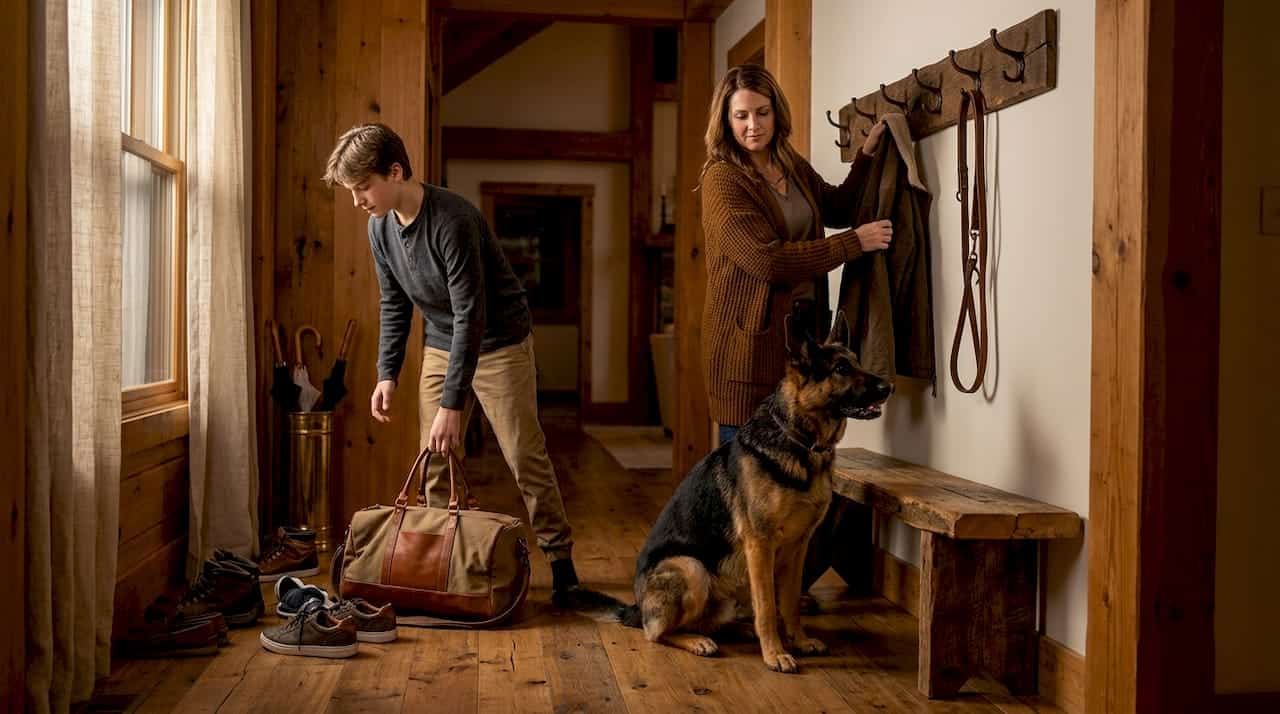
Bringing a professionally trained protection dog into your home is one of the most meaningful investments you can make in your family’s long-term safety and daily peace of mind. These dogs are not simply pets with extra training — they are highly developed companions capable of calm, reliable protection when it matters most. But even the most expertly trained dog requires a well-prepared environment to transition successfully into family life. The steps you take before and after arrival directly shape how quickly your dog settles, how effectively it performs, and how confidently your children and household staff interact with it.
Table of Contents
- What to prepare before your protection dog arrives
- Managing introductions and safe transitions at home
- Structuring boundaries and daily life integration
- Emergency preparedness and contingency planning
- What most families get wrong — and why ongoing support trumps one-time prep
- Ready to level up your family’s safety?
- Frequently asked questions
Key Takeaways
| Point | Details |
|---|---|
| Hazard-proof your home | Eliminate risks and set up secure barriers before your protection dog arrives. |
| Control introductions | Introduce residents and pets in a calm, stepwise manner to avoid stress or conflict. |
| Set daily boundaries | Structure routines and clear rules to reinforce your dog’s role and family security. |
| Prepare for emergencies | Include your protection dog in disaster plans and practice response procedures regularly. |
| Value ongoing support | Long-term safety relies on professional aftercare and regular reinforcement, not one-time setup. |
What to prepare before your protection dog arrives
Having set the context for the importance of strong preparation, you need to handle physical setup and gather key resources for your dog’s arrival. This phase is where most families either set themselves up for a smooth transition or create unnecessary friction that takes weeks to resolve.
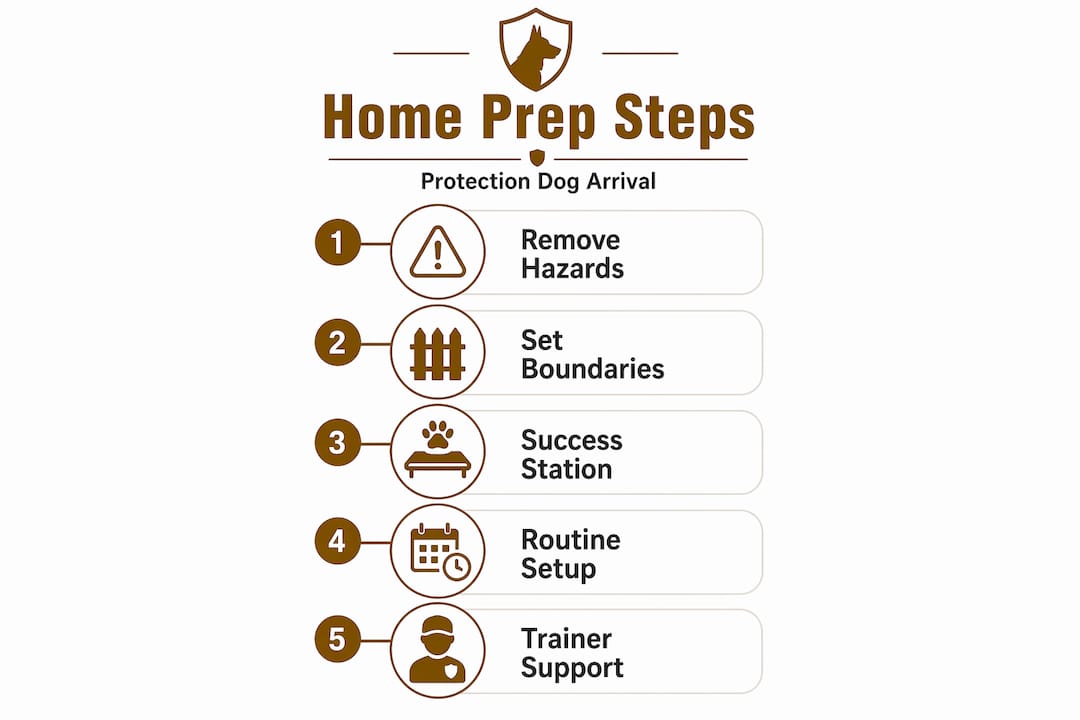
The first priority is hazard elimination. Walk through every room your dog will access and remove or secure anything that poses a risk. This means locking away all medications, cleaning chemicals, and toxic plants. It also means securing loose cables, removing small objects that could be swallowed, and ensuring that valuables or sentimental items are stored out of reach. A protection dog in a new environment is alert and exploratory, and even the most emotionally stable dog will investigate its surroundings thoroughly in the first days.
Core safety groundwork for any new dog includes eliminating hazards and using barriers such as gates and exercise pens, along with confinement tools to prevent access to dangerous items until the dog is ready for more freedom. This applies equally to an elite protection dog arriving in a high-end home.
Next, establish access management using secure barriers. Dog gates and exercise pens allow you to define which areas of the home the dog can access during the initial settling period. This is not a permanent restriction — it is a structured progression that builds the dog’s confidence in a controlled way, preventing overwhelm and reducing the risk of unwanted behavior in unfamiliar spaces.
Pre-arrival checklist:
- Remove or lock away all medications, chemicals, and toxic plants
- Secure loose cables, small objects, and fragile valuables
- Install dog gates at stairways and room entrances as needed
- Set up an exercise pen or designated safe area as a “success station”
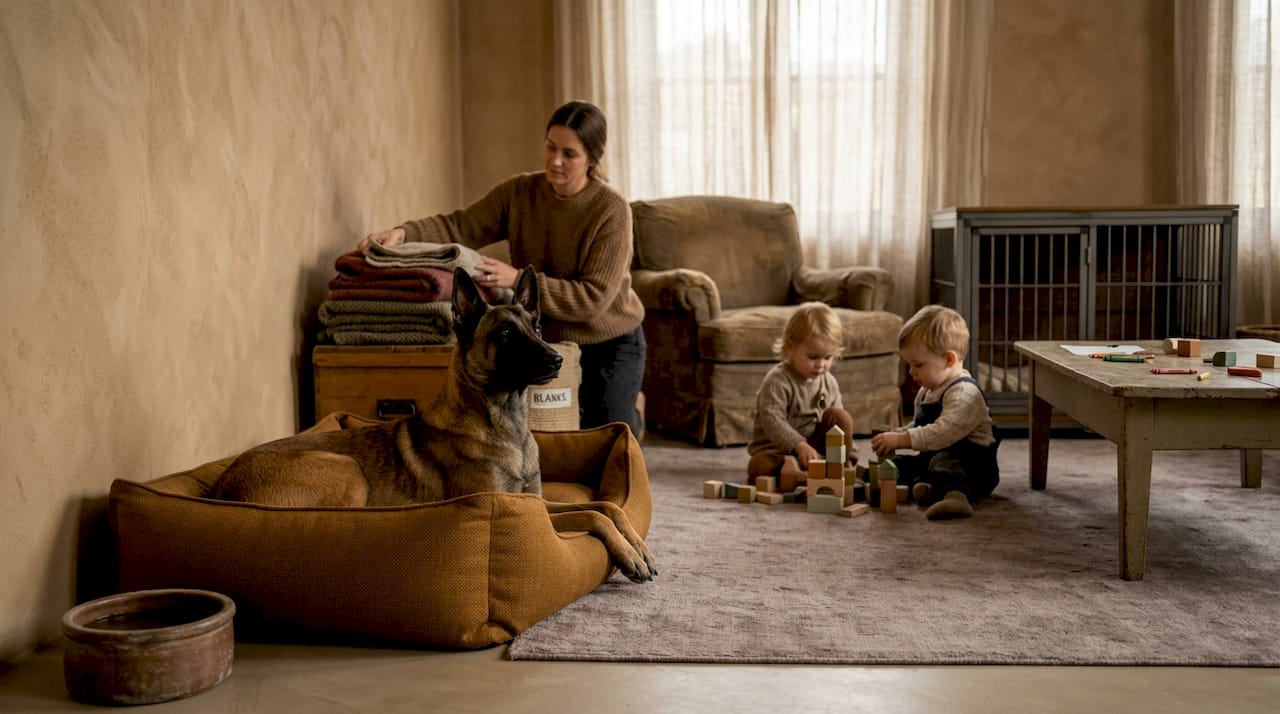
- Prepare a quality dog bed or crate in a low-traffic, quiet location
- Set out food and water bowls in a consistent, accessible spot
- Attach ID tags with current contact information before the dog enters the home
- Confirm that your yard or outdoor areas are fully fenced and secure
The success station concept is particularly important. This is a designated space — often a corner of a main living area — where the dog can settle, observe the household, and decompress without being overwhelmed. It becomes a reliable anchor point during the early integration phase and supports the kind of emotional stability that defines a well-developed protection dog training journey.
| Preparation area | Action required | Priority level |
|---|---|---|
| Hazard removal | Medications, chemicals, cables secured | Critical |
| Access management | Gates and pens installed | Critical |
| Success station setup | Bed, crate, quiet location designated | High |
| Outdoor security | Fencing inspected and confirmed | High |
| Identification | ID tags and microchip details updated | High |
| Supplies ready | Food, bowls, leash, collar prepared | Standard |
Pro Tip: Contact your trainer before arrival day and ask for the specific food brand and feeding schedule the dog has been using. Maintaining dietary consistency during the first two weeks reduces digestive stress and supports a calmer transition.
Managing introductions and safe transitions at home
With your home environment set, it is critical to get introductions right to ensure trust and prevent unnecessary incidents. A protection dog arrives with established training, clear behavioral patterns, and a specific relationship with its primary handler. Your household needs to build its own relationship with the dog in a structured, deliberate way.
The recommended approach follows a stepwise framework:
- Begin with calm adults only. On the first day, limit contact to one or two calm, confident adults. Avoid large gatherings, loud voices, or sudden movements. Allow the dog to approach on its own terms within a controlled space.
- Introduce additional adults over the next 24 to 48 hours. Each new person should be introduced individually, ideally in the dog’s success station area, using calm and neutral body language.
- Introduce older children next, with full supervision. Children should be coached beforehand on how to behave: no running toward the dog, no high-pitched squealing, and no sudden grabs. Keep these sessions short and positive.
- Introduce younger children in a highly controlled setting. Young children require the most careful management. An adult should be physically present and positioned between the child and the dog at all times during early interactions.
- Introduce other pets last, using neutral territory if possible. Allow both animals to observe each other from a distance before any direct contact. Use leashes and barriers to maintain control throughout.
Controlled and gradual exposure reduces risk during initial introductions. Introducing household members at a calm pace and using success-station style management rather than overwhelming the dog is the standard that reputable professionals follow.
Safety note: Managing arousal levels around children is one of the most important responsibilities in the first weeks. Even a well-trained protection dog can become overstimulated by the unpredictable movements and sounds of young children. Always supervise directly, never leave the dog and young children alone together in early stages, and use barriers proactively rather than reactively.
Understanding the family protection dog value comes from seeing how a properly introduced dog integrates seamlessly, rather than creating tension. Rushed introductions are the single most common cause of setbacks in the first month.
| Approach | DIY management | Professional-guided management |
|---|---|---|
| Introduction pacing | Often rushed or inconsistent | Structured, session-by-session |
| Child safety protocols | Variable | Clearly defined and rehearsed |
| Pet introductions | Frequently uncontrolled | Neutral territory, leashed, supervised |
| Arousal management | Reactive | Proactive, with contingency steps |
| Outcome predictability | Lower | Significantly higher |
Pro Tip: Ask your trainer to conduct the first introduction session in person or via video call. Having professional eyes on the initial meeting allows for real-time adjustments that can prevent small issues from becoming established patterns.
Structuring boundaries and daily life integration
Once initial introductions are complete, the focus shifts to setting healthy household routines and maintaining control in everyday life. This is where the long-term success of your protection dog’s integration is actually determined.
A well-structured household environment reinforces the dog’s training and supports its ability to operate in dual roles — as a calm, affectionate family companion and as a reliable protector when a genuine threat presents itself. The key is control and discrimination: the dog remains calm in normal daily life and responds only to real threats, with suitability depending on temperament, training level, and household fit, including around children, pets, and guests.
Boundary-setting guidelines for daily life:
- Define which rooms the dog has free access to and which require permission or are off-limits entirely
- Establish a consistent greeting protocol so the dog does not rush the door when guests arrive
- Use specific trained cues to transition the dog between relaxed companion mode and alert mode
- Set regular feeding times, exercise schedules, and settle periods to build predictability
- Ensure all household members, including domestic staff, understand and apply the same rules consistently
Routine consistency is not simply about convenience. It directly supports the dog’s emotional stability by creating a predictable environment where the dog knows what to expect and when. Dogs that experience inconsistent rules across household members often develop anxiety-related behaviors that erode both their reliability and their temperament over time.
The value of off-leash control becomes particularly clear in daily life scenarios. A dog that responds reliably to off-leash commands can be managed safely in open spaces, during family gatherings, and when guests arrive unexpectedly. This level of control is not accidental — it is the direct result of structured training reinforced consistently at home.
Understanding the importance of obedience training for protection dogs goes beyond basic commands. Obedience is the foundation that allows the dog to operate safely and confidently in complex, real-world family environments.
Pro Tip: Use everyday household moments — doorbell rings, visitors arriving, children playing in the yard — as informal training opportunities. Ask the dog to hold a sit or settle during these events. This reinforces calm, controlled responses in the exact scenarios where you need them most.
Emergency preparedness and contingency planning
Preparation is not only for the day-to-day. High-value families must also anticipate the unexpected for the safety of their most trusted guardians. A protection dog is a critical part of your household’s security infrastructure, and it must be included in your emergency planning with the same seriousness as any other safety system.
Emergency planning should be treated as part of home preparedness for a dog. This means establishing a disaster plan, considering crate training for easier transport, and practicing elements of the plan, including muzzle desensitization if needed for veterinary or emergency situations.
Emergency kit essentials for your protection dog:
- Minimum 72-hour supply of food and water
- Copies of vaccination records, microchip information, and veterinary contacts
- Leash, collar, and a well-fitted muzzle (desensitized in advance)
- Any required medications with clear dosage instructions
- A recent photograph for identification purposes
- Portable crate or carrier for transport
Follow these steps to build and practice your contingency plan:
- Designate a primary and backup evacuation route from your property that accommodates the dog safely.
- Practice crate loading regularly so the dog enters the crate calmly and without resistance under stress.
- Conduct at least two full evacuation drills per year that include the dog, all household members, and any relevant staff.
- Identify a secure, pre-arranged boarding facility or trusted individual who can care for the dog if you are temporarily unable to do so.
- Review and update your emergency kit every six months to ensure food is fresh and documents are current.
Critical reminder: Pets that are not included in family emergency drills are significantly more difficult to manage during actual emergencies. Practice removes hesitation and builds the dog’s confidence in high-stress situations, which directly supports its reliability as a protector.
| Scenario | Planned response | Unplanned response |
|---|---|---|
| Natural disaster evacuation | Dog enters crate on command, exits with family | Dog is difficult to load, delays evacuation |
| Medical emergency at home | Dog remains in settle, does not interfere | Dog becomes agitated, adds to chaos |
| Unexpected intruder | Dog responds to trained cue, family follows protocol | Unpredictable response, no clear household plan |
| Temporary owner absence | Pre-arranged caregiver briefed on dog’s protocols | Caregiver unfamiliar with commands or behavior |
Families who invest in a dog disaster preparedness plan are not simply protecting their dog. They are protecting the integrity of their entire household security system.
What most families get wrong — and why ongoing support trumps one-time prep
Here is a perspective that many families do not hear until they are already dealing with a problem: the checklist is not the finish line. It is the starting point. The most common source of difficulty with protection dogs in high-end family homes is not temperament, and it is not the quality of the dog’s training. It is the gradual relaxation of boundaries and the absence of reinforcement over time.
In the first weeks, families are attentive. Rules are followed, introductions are managed carefully, and the dog’s cues are respected. But around the three to six month mark, consistency tends to erode. The dog is allowed to greet guests without a settle command. Children begin roughhousing in ways that were previously managed. Staff members apply different rules than the primary household. These small deviations accumulate, and over time they create a dog that is less reliable, less predictable, and ultimately less safe.
The solution is not more preparation at the start. It is ongoing reinforcement and professional support throughout the dog’s life in your home. Quarterly training refresh sessions with your original trainer are not a luxury — they are a maintenance requirement for a working protection dog. These sessions recalibrate the dog’s responses, address any behavioral drift, and give your family updated guidance as children grow and household dynamics change.
The benefits of professional aftercare extend well beyond the initial handover period. Families that maintain a structured relationship with their trainer consistently report greater confidence in their dog’s reliability and a stronger bond between the dog and every household member. The investment in ongoing support is, in practical terms, the investment in the dog’s continued effectiveness.
Ready to level up your family’s safety?
You now have a clear, structured framework for preparing your home, managing introductions, building daily routines, and planning for emergencies. The next step is ensuring you have the right dog and the right professional support behind you from day one.
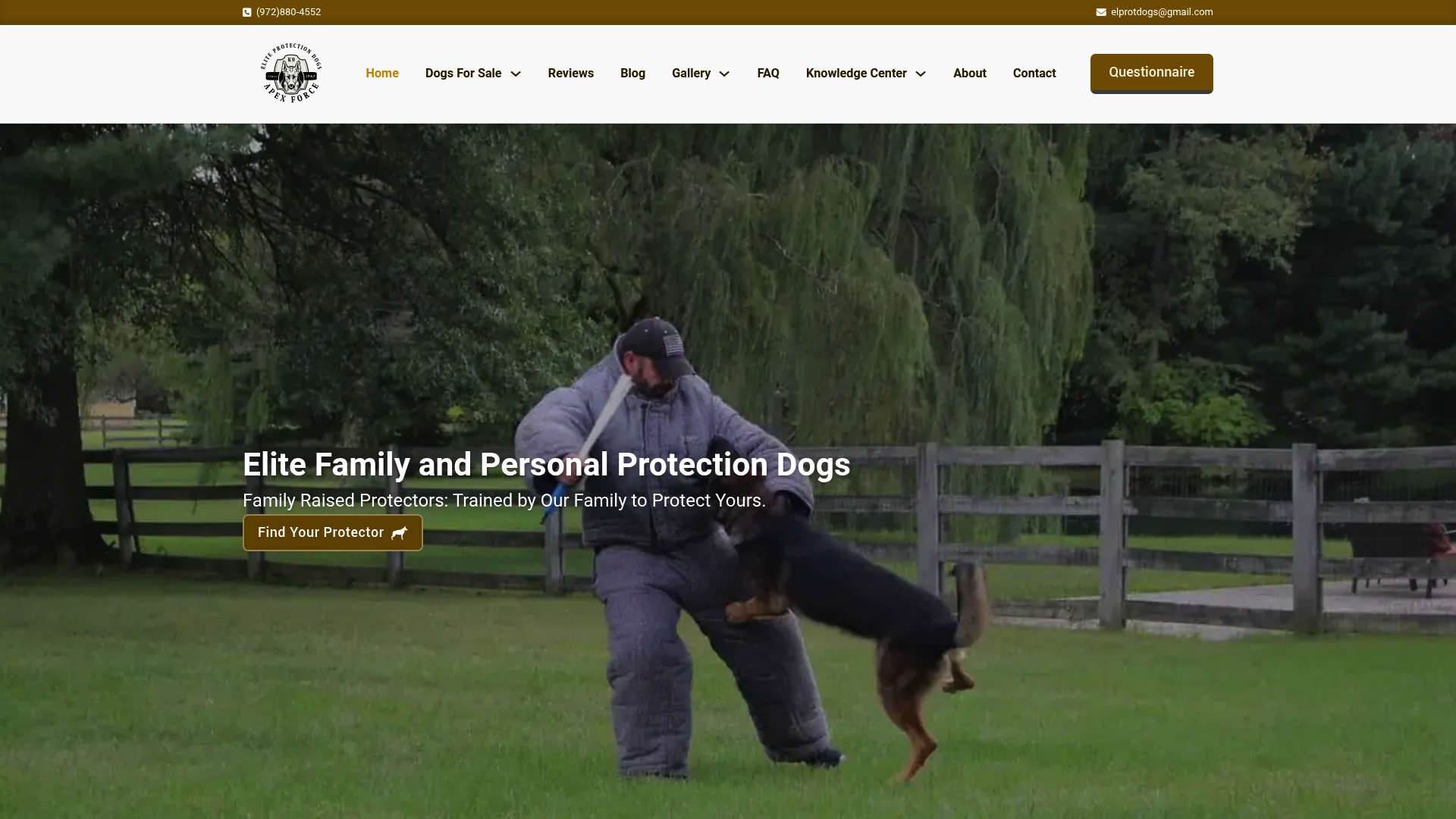
Our elite protection dogs are developed through years of hands-on training specifically designed for real-world family integration. Each dog is carefully matched to your household’s specific needs, lifestyle, and security requirements. Whether you are ready to explore protection dogs or want to understand why a professionally trained dog is your family’s best defense, our team is ready to guide you through every step of the process. Reach out today and take the first confident step toward lasting peace of mind for your family.
Frequently asked questions
How do I introduce a protection dog to young children?
Start with structured, calm introductions in a controlled space, supervise closely at all times, and progress gradually using professional guidance to manage arousal and ensure safe, positive interactions from the beginning.
Is having a protection dog safe for guests and other pets?
With the right training and consistent management, protection dogs can coexist safely with guests and other pets. Suitability depends on the dog’s temperament, training level, and how carefully the household manages introductions and ongoing interactions.
What home changes are needed before getting a protection dog?
Eliminate hazards, install dog gates or exercise pens to manage access, and prepare a designated settle area before the dog arrives. Eliminating hazards and using barriers are the core safety steps that every household should complete in advance.
Should I have an emergency plan for my protection dog?
Yes, every household with a protection dog should have a documented disaster plan that includes the dog. Emergency planning for dogs should cover evacuation routes, crate training, emergency supply kits, and regular practice drills to ensure the dog responds calmly under stress.
Recommended
- Professional Protection Dogs for Home Security: Trusted Family Safety Solutions
- Home protection Dog Companion: 5 Key Things to Know
- Why Bonding with Your Protection Dog Matters – Elite Protection Dogs
- Why a Protection Dog is Your Family’s Best Defense – Elite Protection Dogs
Article generated by BabyLoveGrowth
