Protection Dog Buying Guide
Where to Buy a Protection Dog: Why the Company Behind the Dog Matters
When a family begins searching for a fully trained protection dog, the first questions usually concern the dog itself. What breed is best? How old is the dog? What level of protection training does it have? Is it safe around children? How much does a professionally trained protection dog cost? These are important questions. But after decades of working with protection dogs, working dogs, families, professional handlers, and demanding real-world environments, I believe there is another question that deserves just as much attention.
What You Will Learn
This guide explains why the company behind a protection dog is as important as the dog itself — covering selection, training standards, real-world reliability, delivery, handler education, and long-term support.

Who Stands Behind the Dog After It Enters Your Home?
A professionally trained family protection dog is not a product that should simply be purchased, shipped, and forgotten.
This is a living animal with genetics, temperament, training, experience, strengths, and an individual personality. More importantly, this dog is being introduced into your family, your home, your daily routine, your children, your guests, your employees, your travel schedule, and potentially your personal security.
The company you choose therefore matters just as much as the dog you choose.
Where Should You Buy a Protection Dog?
For someone searching for protection dogs for sale in the USA, fully trained protection dogs, or where to buy a protection dog, there are many choices today.
There are American trainers, European trainers, importers, brokers, breeders, sport-dog kennels, police-dog suppliers, and specialized protection-dog companies. There are also more dogs being marketed online as “elite protection dogs” than ever before. That makes choosing the right company more complicated than it may initially appear.
A beautiful website does not prove the quality of a dog. An impressive protection video does not prove that the dog can live safely with a family. European bloodlines do not automatically make a dog suitable for personal protection. And powerful bite work certainly does not tell me whether I would trust that dog around someone’s children, invited guests, household staff, or in a busy public environment.
When I evaluate a protection dog, I am interested in the entire dog.
What I look for in every dog:
- Stability and confidence without unnecessary aggression
- Environmental strength and fast recovery from pressure
- Neutrality around people and animals
- Obedience when the dog is excited
- Clear understanding of ordinary life versus a real threat
- Trustworthiness when nothing is happening
That last part is often overlooked. A personal protection dog may only be required to actively protect its family in an exceptional situation. The rest of its life is spent being a companion — living in the home, traveling, resting beside the family, being around children, accepting invited guests, walking through public environments, riding in vehicles, staying in hotels, and remaining calm when the world around it is busy.
Explore Available Protection Dogs
European Protection Dogs vs. U.S.-Based Protection Dog Companies
There is a misconception that buyers must choose between European dogs and American companies. They do not.
Some of the finest working-dog genetics in the world have historically come from Europe. German Shepherds, Belgian Malinois, Dobermans, and Rottweilers from established European working lines can offer exceptional qualities. Our own professional heritage is European. For generations, our family has been involved with working dogs, breeding, training, selection, and professional canine development. That European foundation remains an important part of how we evaluate and develop dogs today.
But there is an important distinction between where a dog comes from and who is responsible for preparing that dog for your family and standing behind it afterward.
For an American client, I believe the ideal combination is straightforward: exceptional European genetics and professional training heritage, combined with U.S.-based preparation, accountability, personal delivery, handler education, and long-term support. That is the model we have built at Apex Force K9 / Elite Protection Dogs.
Reliability Is Built Through Training, Repetition, Experience, and Real-World Exposure
One principle is very important to understand: a professionally trained family protection dog should not require a special type of family in order to be reliable. The selection process happens before the dog reaches this level.
If a dog cannot develop the stability, neutrality, confidence, and clear judgment required for family protection work, our responsibility as professionals is not to search for a household that can accommodate those weaknesses. That dog should not be represented as an elite family protection dog.
Every dog we prepare for this purpose must meet the same fundamental standard. The dog must be able to live calmly in a home, accept invited guests, remain neutral around normal human activity, travel confidently, behave appropriately in public, and distinguish everyday situations from circumstances that require a different response.
These qualities begin with genetics and correct professional selection, but reliability is developed through training, repetition, experience, and extensive real-world exposure.
At the same time, the dog must learn to recognize when a situation changes. Through carefully structured training and realistic scenarios, we develop the dog’s ability to remain clear-headed under pressure, respond when protection is required, and return to a controlled, neutral state when the situation is over.
This cannot be created through shortcuts. It takes thousands of repetitions, progressive training, environmental exposure, scenario work, experienced handling, and time. That experience is what creates predictability.
Protection Training Is Only Part of the Equation
People naturally associate a personal protection dog with protection work. But experienced professionals know that protection is only one component of the finished dog.
A properly developed family protection dog must understand control before power becomes valuable. The dog should be able to remain neutral when there is no threat and respond decisively when protection is genuinely required. That requires much more than teaching a dog to bite.
The qualities that actually matter:
- Stable temperament — confident and composed without looking for reasons to react
- Environmental confidence — surfaces, noises, crowds, elevators, vehicles, unfamiliar places
- True neutrality — no wasted energy on every stranger or movement
- Clear obedience under drive, excitement, and pressure
- Fast stress recovery and return to a clear state of mind
- Predictability across normal situations and different environments
- Controlled protection capability that remains under handler control
Real-World Protection Dog Training Matters
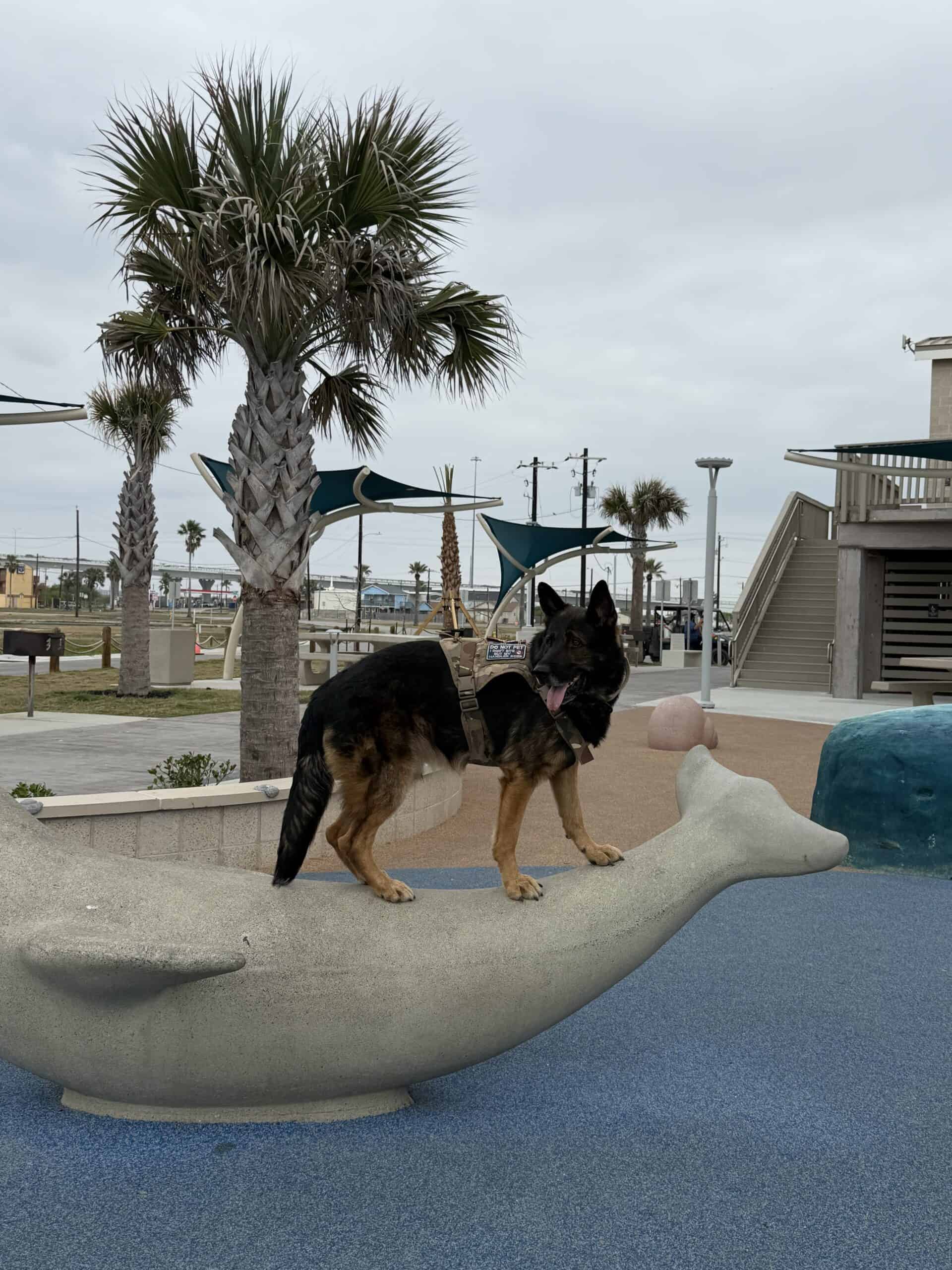
Training fields are useful. They allow trainers to develop individual skills in a structured environment. But families do not live on training fields. That is why the dog’s education eventually has to move into real life.
Our dogs are prepared for environments and situations they may realistically experience with their future owners. Depending on the individual dog’s training program, this can include exposure and training around:
- Homes and residential environments
- Children and normal family activity
- Invited guests and household personnel
- Contractors and service providers
- Vehicles, elevators, and confined spaces
- Urban environments, restaurants, hotels
- Heavy pedestrian traffic and unfamiliar buildings
- Travel environments and sudden distractions
- Realistic threat and home-invasion scenarios
- Vehicle-related protection scenarios
The purpose is not to create aggression. The purpose is exactly the opposite. We want a dog that has experienced enough of the world that normal life remains normal. A protection dog should not spend its day searching for something to react to. It should be calm because it understands its environment and confident because it has been properly prepared.
Repetition Creates Reliability
One of the biggest differences between basic training and advanced professional training is repetition. A dog can learn a command relatively quickly. That does not mean the behavior is reliable.
Reliability is built when the dog performs correctly again and again, under different conditions and with increasing levels of distraction. We may teach something in a controlled environment, but then we must take that behavior into the real world — around traffic, people, inside buildings, other dogs, at the home, in unfamiliar locations, when the dog is excited, when the environment changes, and when appropriate, under pressure.
Why Personal Delivery and Handler Training Matter
I do not believe a high-level protection dog should simply arrive at the client’s home with a list of commands. The dog has received extensive education. Now the owner needs education as well.
This is why personal delivery and our Comprehensive Handling Course are important parts of the process. During the transition, we work directly with the client so they understand not only what commands to use, but how to communicate with the dog correctly.
We address the dog’s routines, obedience, household structure, public handling, protection commands, boundaries, rewards, corrections, and day-to-day management. We also work with the dog and family together. This allows us to make adjustments based on what we actually observe in the dog’s new environment.
What Happens After Your Protection Dog Comes Home?
This is where clients should pay particularly close attention when comparing protection-dog companies. Ask what happens after the payment and delivery. Who answers your questions? Who understands your dog’s training history? Who can explain why the dog is behaving a certain way? Who can provide maintenance training? Who can work with you again a year later?
At Apex Force K9 / Elite Protection Dogs, we consider post-delivery support part of responsible placement. A family may have questions during the transition. That is normal. A new residence, additional household staff, another dog, increased travel, or changes in the family’s routine may require additional guidance.
Training must also be maintained. Even the best-trained protection dog is still a dog. Skills remain strongest when owners maintain expectations, obedience, communication, and structure. For this reason, we strongly believe in continued client education and periodic professional maintenance training. We want the dog performing correctly years after delivery — not merely on delivery day.
The Difference Between a Protection Dog Trainer and a Dog Broker
This is another area buyers should investigate carefully. Ask one simple question: Who actually trained the dog?
There is nothing inherently wrong with sourcing dogs internationally. We work with European dogs because access to exceptional genetics and suitable prospects is important. But sourcing is not the same as developing.
A company should know much more about a dog than what appears on its pedigree or training certificate. We want to know the dog’s temperament, its strengths, its weaknesses, its drives, its environmental behavior, its social behavior, its recovery from pressure, its obedience, its protection characteristics, its behavior inside the home, around guests, in public, and its ability to transition between calm family life and controlled protection work.
You cannot learn all of that from a sales video. It requires time with the dog, training, repetition, and professional experience.
Family Protection Dogs and Children
For families with children, stability becomes even more important. Parents sometimes assume that the strongest or most intimidating dog will provide the greatest security. I look at it differently.
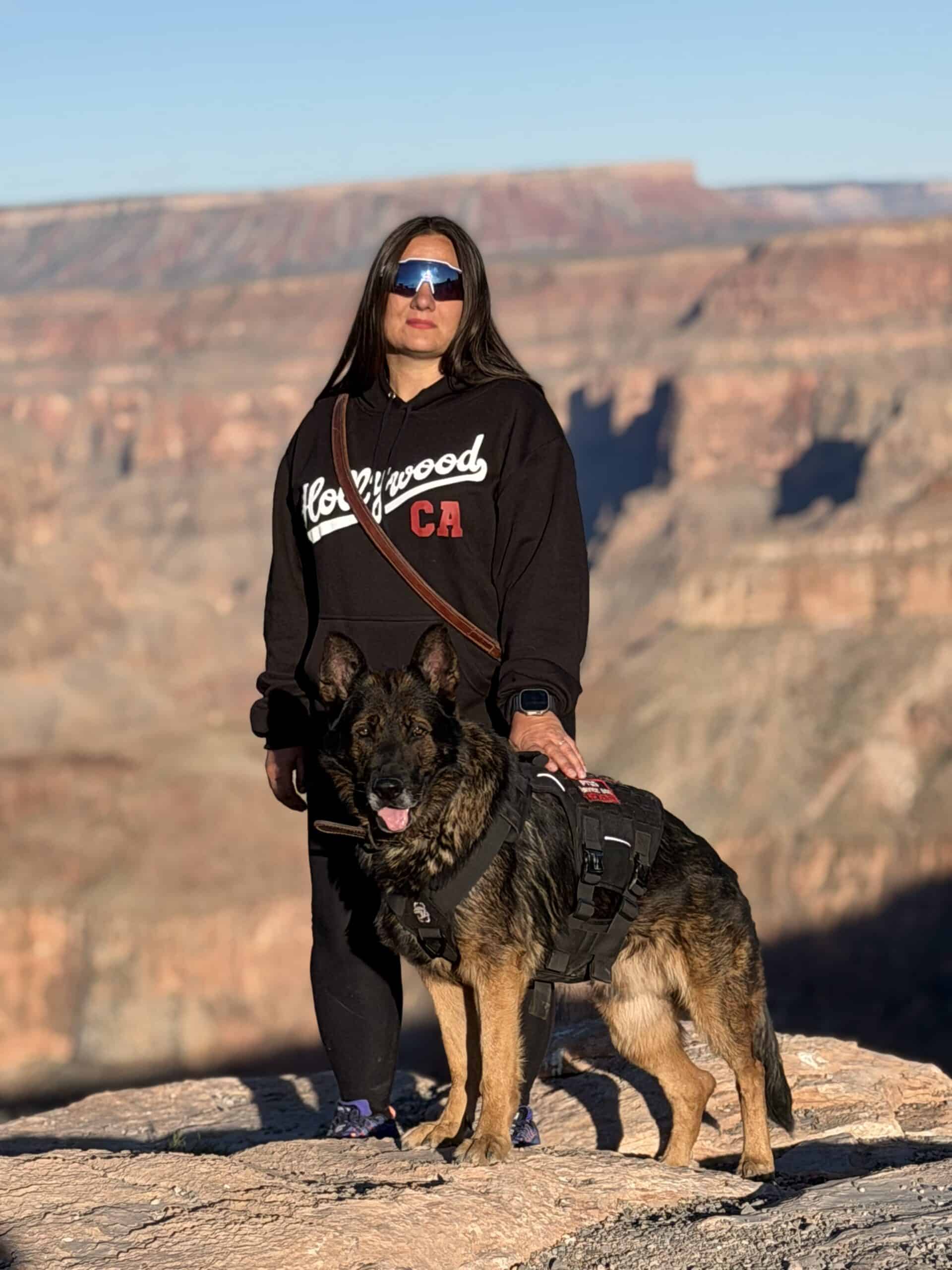
I want a dog that can possess serious protection capability while still having the mental stability required to live calmly within a family environment. Children move unpredictably. They run, make noise, play, bring friends into the home. Toys fall, doors open, people visit. Daily family life is full of activity that should mean absolutely nothing threatening to a stable, properly trained dog.
A trustworthy family protection dog must be able to live within that environment without unnecessary suspicion or reactivity. The same principle applies to invited guests. A guest should be a guest. A threat should be a threat. The dog must understand the difference.
What Should You Look for When Buying a Protection Dog?
If you are considering purchasing a trained protection dog in the United States, I recommend looking beyond the marketing.
- Who selected the dog and evaluated its genetic and temperamental foundation?
- Who actually trained the dog — experienced trainers or resellers?
- How was the dog’s temperament evaluated beyond protection ability?
- How much real-world experience does the dog have outside the training field?
- Is the dog truly neutral around normal people, guests, and everyday activity?
- Can the dog clearly distinguish normal situations from genuine threats?
- Has the training been tested and proven across different environments?
- Who delivers the dog and teaches the family how to handle it?
- Is comprehensive professional handler education included?
- What happens after delivery — support, maintenance, long-term assistance?
- What health documentation, veterinary standards, and written guarantees are provided?
Why U.S.-Based Accountability Matters
For American clients, having a company established in the United States creates an important layer of accessibility and accountability. But geography alone is not enough. Being located in the United States does not automatically make a company qualified.
Experience matters. Training standards matter. Selection matters. Ethics matter. The quality of the dogs matters. And the company’s willingness to remain involved after the sale matters.
Our goal at Apex Force K9 / Elite Protection Dogs has been to combine our European working-dog heritage with a U.S.-based operation serving American families, executives, and individuals seeking a serious level of personal and family protection. We understand European dogs because that is where our professional foundation was built. We understand the American client because this is where we operate today.
More Than a Protection Dog: A Long-Term Responsibility
I have spent enough years around dogs to know that no serious professional should treat them simply as inventory. Every dog is an individual. Every training process takes time. And every placement carries responsibility.
When someone entrusts us with helping protect their family, I take that responsibility personally. Of course, this is a business. We invest enormous amounts of time, professional knowledge, infrastructure, travel, veterinary care, training, and resources into developing these dogs. But behind every contract is a family — a husband or wife, children, a home, a person who may travel with the dog every day, someone who wants another layer of security around the people who matter most to them.
Why Families Choose Apex Force K9 / Elite Protection Dogs
Our approach is built around generations of working-dog knowledge combined with modern, real-world protection training. We focus on:
- Carefully selected European working genetics
- Professional temperament evaluation
- Advanced obedience and controlled protection
- Extensive repetition and real-world exposure
- Public neutrality and guest-friendly behavior
- Home integration and travel adaptability
- Scenario-based training
- Professional personal delivery
- Comprehensive handler education
- Post-delivery support and maintenance training
- Long-term client relationships
We do not believe a protection dog should look impressive only when a camera is recording. The dog must work in real life. It must be capable when necessary and easy to live with when nothing is happening. That balance is much more difficult to produce than aggression. It is also what separates a serious family protection dog from a dog that has simply been taught protection exercises.
Where to Buy a Protection Dog in the USA
If you are researching where to buy a protection dog in the United States, do not make your decision based solely on breed, price, photographs, bite-work videos, titles, or country of origin.
Study the people behind the dog. Look at their history. Understand their philosophy. Ask how they select dogs. Ask who actually trains them. Ask where and how the dogs live. Ask how they test temperament. Ask how many different environments the dogs experience. Ask whether the dog can remain neutral around normal people and situations. Ask whether invited guests can enter the home without creating unnecessary conflict. Ask how the dogs are prepared for real life. Ask who will personally deliver your dog. Ask what you will be taught.
For me, that question says a great deal about a company. At Apex Force K9 / Elite Protection Dogs, our responsibility is not simply to sell an exceptional dog. Our responsibility is to develop that dog correctly, prepare the owner correctly, and stand behind the work we have done. Because when you are purchasing a dog that will live beside your family and potentially be trusted with their protection, there should be no lower standard.
Frequently Asked Questions About Buying a Protection Dog
Where is the best place to buy a protection dog?
The best place to buy a protection dog is from an experienced company that can demonstrate professional selection, stable temperament, extensive real-world training, personal delivery, handler education, and support after placement. The quality and experience of the company behind the dog are as important as the dog’s breed or origin.
Should I buy a protection dog from Europe or the United States?
This should not be treated as an either-or decision. Europe has produced exceptional working-dog bloodlines and generations of professional training knowledge. For U.S. buyers, European genetics and expertise combined with U.S.-based training, client support, delivery, and accountability can provide the advantages of both.
Are European protection dogs better?
Not automatically. European bloodlines can be exceptional, but pedigree and country of origin do not guarantee suitability for family protection. Genetics establish the foundation; professional selection, training, repetition, experience, and real-world exposure determine what the dog becomes.
What is the difference between a guard dog and a personal protection dog?
A professionally trained personal protection dog is developed to live closely with its handler and family while remaining controlled, obedient, socially stable, and capable of responding appropriately when protection is genuinely required. A dog that simply displays territorial aggression or reacts aggressively to strangers should not automatically be considered a trained personal protection dog.
Should a protection dog be friendly with guests?
A properly trained family protection dog should be capable of calmly accepting invited guests and understanding that normal social interaction is not a threat. A dog that reacts unnecessarily to every visitor creates management problems rather than security.
Should a protection dog be neutral in public?
Yes. Neutrality is one of the most important characteristics of a professionally developed protection dog. The dog should be capable of moving through normal public environments without unnecessary reactions while remaining responsive to its handler and aware of its surroundings.
Can a protection dog safely live with children?
A professionally selected and properly developed family protection dog should be capable of living calmly within normal family activity. Genetics, temperament, training, repetition, exposure, experience, and responsible handling all contribute to that reliability.
What breeds make the best family protection dogs?
German Shepherds, Belgian Malinois, Dobermans, and Rottweilers are among the breeds commonly associated with professional protection work. However, breed alone does not create a protection dog. Genetics, nerve strength, temperament, health, trainability, professional development, and real-world experience are far more important.
What should a fully trained protection dog know?
Depending on its training level, a fully trained protection dog should demonstrate reliable obedience, environmental confidence, appropriate neutrality, controlled protection behavior, responsiveness under pressure, and the ability to function calmly in normal daily life. Advanced dogs may receive additional scenario, travel, public-environment, and specialized protection training.
Why is handler training necessary after buying a protection dog?
The dog has received extensive professional training, but the new owner must learn how to correctly communicate with and maintain that training. Handler education establishes commands, timing, boundaries, household routines, protection control, and consistency between the professional training system and the dog’s new home.
Does a protection dog need maintenance training?
Yes. Professional training should be maintained throughout the dog’s working life. Consistent handling at home combined with periodic professional maintenance helps preserve obedience, clarity, confidence, and protection performance.
What makes Apex Force K9 / Elite Protection Dogs different?
Apex Force K9 / Elite Protection Dogs combines generations of European working-dog experience with a U.S.-based training and client-support operation. Our focus is not simply producing dogs capable of protection work, but developing stable, neutral, experienced dogs capable of living calmly with families while providing serious, controlled protection when required.
Final Thoughts From Laszlo Pek Mrazovac
After decades in this profession, I still believe the most impressive protection dog is not necessarily the dog that bites the hardest, barks the loudest, or looks the most intimidating.
It is the dog that understands when not to react. It is the dog that can lie calmly beside your family tonight, welcome an invited guest into your home tomorrow, walk neutrally through a busy environment the next day, and still possess the confidence, training, and capability to respond decisively if a genuine threat occurs.
That balance between stability and capability is extraordinarily difficult to create. It begins with genetics and professional selection. It develops through training. It becomes reliable through repetition. It becomes confident through experience. And it is proven through real-world exposure.
That is what I believe a true family and personal protection dog should be. And that is the standard we pursue at Apex Force K9 / Elite Protection Dogs.
Ready to Take the Next Step?
Find the Right Protection Dog for Your Family
Every placement begins with understanding your life, your environment, and the level of capability you actually need. Explore the dogs currently available or speak with us directly about a custom placement.