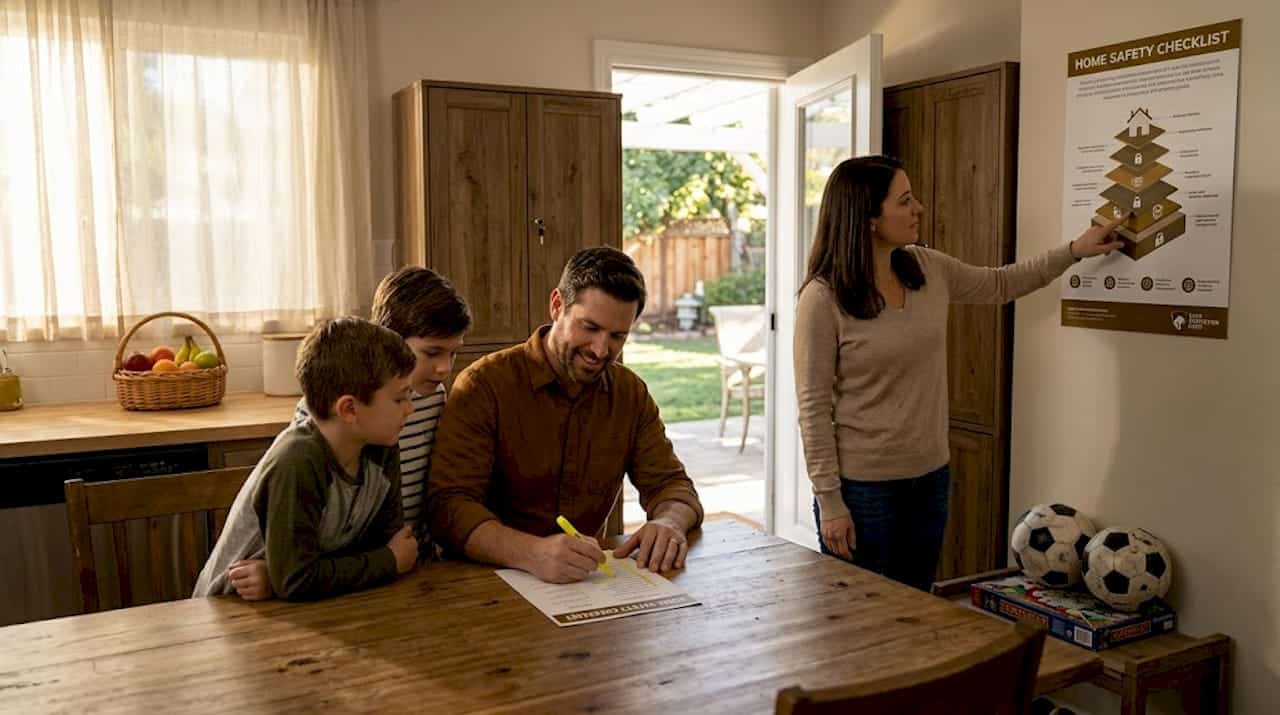
A well-trained protection dog is one of the most effective deterrents a family can have. But families who rely on their dog as the sole line of defense are building their security on a single point of failure. Family safety layers beyond protection dogs represent the difference between a reactive approach and a genuinely resilient one. Physical hardening, technological detection, behavioral readiness, and fire safety each address threats that a dog simply cannot. This article walks through every layer, how they interact, and how to stack them in a way that actually protects the people in your home.
Table of Contents
- Understanding layered security: criteria for family safety beyond protection dogs
- Physical layers: securing your home from perimeter to safe room
- Technological layers: alarms, cameras, and monitoring to complement protection dogs
- Behavioral layers: situational awareness and family safety routines
- Fire and life safety layers: essential detection and preparedness for families
- Comparing family safety layers: strengths and limitations beyond protection dogs
- Why relying on protection dogs alone can leave gaps in family safety
- Explore how protection dogs fit into a comprehensive family safety strategy
- Frequently asked questions
Key Takeaways
| Point | Details |
|---|---|
| Defense-in-depth approach | Stacking multiple security layers greatly improves protection beyond relying on protection dogs alone. |
| Physical home hardening | Reinforcing doors, windows, and interior controls delays intruders and enhances family safety. |
| Technology integration | Alarms, AI cameras, and professional monitoring increase detection and deter threats efficiently. |
| Behavioral safety skills | Teaching situational awareness and safety routines empowers family members, especially children. |
| Fire safety layering | Layered fire alarms and suppression tools close detection gaps and enhance emergency response readiness. |
Understanding layered security: criteria for family safety beyond protection dogs
Security professionals refer to layered protection as “defense-in-depth”, a framework that stacks deterrence, detection, delay, and response measures so that if one layer fails, another catches the threat. No single measure, whether a protection dog, an alarm system, or a reinforced door, operates effectively in isolation. Each layer covers the blind spots of the others.
For families with children, the criteria for evaluating any safety layer should include four core questions. Does it deter before a threat develops? Does it detect when deterrence fails? Does it delay long enough for a response? And does it support communication so your family can act? Every measure you add should satisfy at least one of these criteria, ideally more.
A protection dog satisfies deterrence and detection at a high level. A well-trained dog also provides physical delay. But it does not replace a safe room, a practiced emergency plan, or a camera system that monitors areas outside your dog’s range. Families who are preparing their home for a protection dog are already thinking in layers, which is exactly the right mindset.
The four evaluation criteria for any safety measure:
- Deterrence: Does it discourage a threat before it reaches your family?
- Detection: Does it identify a threat when it arrives?
- Delay: Does it slow a threat long enough for a response?
- Communication: Does it alert your family or outside help immediately?
Physical layers: securing your home from perimeter to safe room
Five physical security layers, adapted from executive protection practices, apply directly to residential family safety: neighborhood approach, perimeter, shell, interior, and safe room. Working through each one systematically is what separates a thoughtful security plan from scattered, expensive upgrades that leave obvious gaps.
Layer 1: Neighborhood approach. Awareness of your immediate environment, including unfamiliar vehicles parked outside, strangers who appear repeatedly, and poorly lit entry points, provides early warning before a threat ever reaches your property. Families in private communities benefit from sharing observations with neighbors and utilizing community safety resources like neighborhood watch programs.
Layer 2: Perimeter security. Fencing, gated entries, motion-activated exterior lighting, and controlled landscape (trimmed hedges that remove hiding spots) all increase the cost and visibility of any approach to your home. A perimeter is not about being impenetrable. It is about being visibly defended.
Layer 3: Shell security. Reinforced exterior doors with quality deadbolts, laminated glass or window film on ground-floor windows, and entry point alarms create the critical boundary between outside and inside. Door reinforcement kits are an often-overlooked child safety measure, costing under $100 and dramatically increasing kick resistance.
Layer 4: Interior security. Motion sensors, interior cameras, and door-specific alarms within the home detect movement if entry is breached. Hallway placement is particularly effective because it channels movement into monitored zones.
Layer 5: Safe room. A safe room built for families functions as the last-resort refuge. It should have a reinforced door, a charged communication device (separate from your primary phone), and supplies stocked for 24 to 72 hours, including water, a first aid kit, and backup lighting. The goal is to buy time for outside help to arrive.
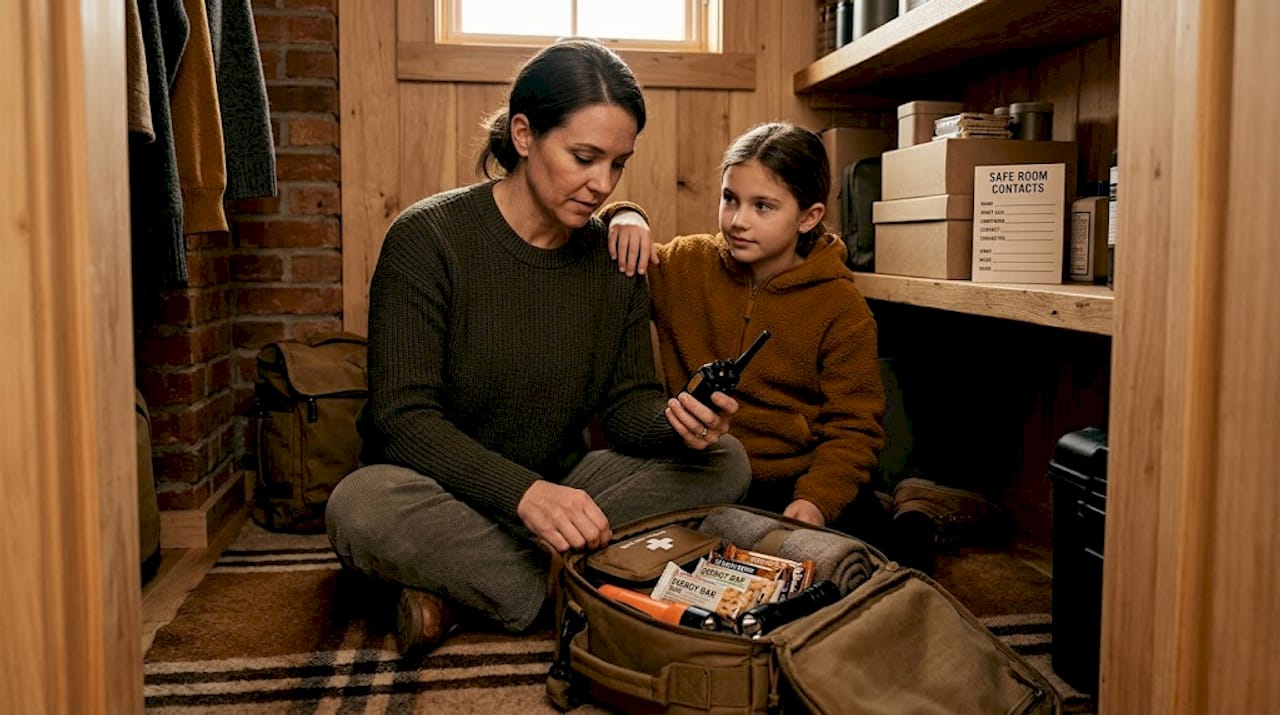
Safe room retrofit costs are often far lower than families assume. A focused retrofit targeting door reinforcement, a backup battery communication device, and a basic supply kit typically runs between $200 and $500.
| Safe room component | Estimated cost | Primary function |
|---|---|---|
| Door reinforcement kit | $80 to $150 | Delay forced entry |
| Solid core door upgrade | $150 to $300 | Structural protection |
| Battery backup communicator | $40 to $100 | Independent communication |
| 72-hour supply kit | $60 to $120 | Sustain family during wait |
| Interior deadbolt | $30 to $60 | Controlled access |
Pro Tip: Designate the safe room location to every family member, including children, and practice getting there as part of your regular home preparation for a protection dog. Drills remove hesitation when it matters most.
Technological layers: alarms, cameras, and monitoring to complement protection dogs
Modern home security systems operate as a network of overlapping sensors rather than a single device. Combining alarms, cameras, and professional monitoring reduces reliance on any one element, including a protection dog, by ensuring threats are detected and escalated even when the dog is in another part of the home or is occupied with your children.
AI-powered outdoor cameras have changed the technology layer considerably. They recognize the difference between a delivery vehicle, a pedestrian, and someone approaching a restricted entry point, then alert both your mobile device and a monitoring center within seconds. That speed closes the gap between detection and response in a way that traditional motion sensors alone could not.
Motion-activated lighting combined with alarm alerts removes attacker anonymity, which is one of the most effective deterrents available at low cost. Most opportunistic threats rely on darkness and surprise. Eliminate both and you eliminate a significant portion of the risk. Pairing this with alarms and cameras suited to pet-friendly homes ensures your system works with your dog’s movements rather than against them.
Key technology components for a family security ecosystem:
- Entry sensors on every door and accessible window with immediate push alerts
- AI outdoor cameras with facial and behavioral recognition at all entry points
- Interior motion sensors in hallways and common areas
- Professional monitoring for remote escalation and direct contact with emergency services
- Mobile app integration so parents receive real-time alerts regardless of location
- Smart locks that allow controlled remote access and log entry attempts
Pro Tip: When evaluating AI alarm systems versus protection dogs, the answer is not either/or. Technology monitors while a dog responds. Use both, and let each do what it does best.
Behavioral layers: situational awareness and family safety routines
Physical barriers and cameras protect your property. Behavioral habits protect your family when they are away from it. Personal safety tips grounded in situational awareness are among the most reliable preventive safety layers available, and they require no hardware, no subscription, and no maintenance.
Official personal safety guidance consistently emphasizes three behavioral foundations: staying alert to your surroundings, choosing well-lit and populated routes, and trusting instinctive discomfort. For children, translating these principles into concrete habits is more effective than abstract warnings. Teach them to notice who is around them, to tell a trusted adult when something feels wrong, and to practice walking to a public location rather than freezing if they feel unsafe.
“Personal safety readiness involves building confidence, practicing de-escalation, and leaving unsafe situations before they escalate.” — Utah State University personal safety guidance
Family emergency plans function as behavioral infrastructure. Regular practice of emergency procedures reduces panic-driven decisions, because families who have rehearsed a response do not need to invent one under pressure. Assign specific roles, designate a meeting location outside the home, and confirm that every family member, including older children, knows how to contact emergency services independently.
Behavioral practices every family should establish:
- Practice monthly fire and intrusion drills with assigned roles for each family member
- Teach children to identify two trusted adults outside the home they can contact
- Establish a family code word that signals immediate, no-questions departure from a situation
- Review protection dog training and safety habits to align behavioral protocols with your dog’s trained responses
Fire and life safety layers: essential detection and preparedness for families
Intrusion threats receive the majority of attention in most family safety planning conversations. But a whole-home fire and life safety toolkit addresses a statistically more frequent risk and fills critical detection gaps that no security camera or protection dog can cover.
Smoke alarms should be installed on every level of the home, inside each bedroom, and outside sleeping areas. Carbon monoxide detectors belong on every floor and near any gas-burning appliance. Interconnected alarms, where triggering one wakes them all simultaneously, are the current standard for whole-home coverage. If your existing alarms are not interconnected, replacing them is one of the highest-return child safety measures available.
| Device | Placement | Recommended testing | Replacement interval |
|---|---|---|---|
| Smoke alarm | Every level, inside/outside bedrooms | Monthly | 10 years |
| Carbon monoxide detector | Every floor, near gas appliances | Monthly | 5 to 7 years |
| Fire extinguisher | Kitchen, garage, each floor | Annual inspection | 12 years |
| Escape ladder | Upper floors | Practice annually | Per manufacturer |
Fire and life safety checklist:
- Install interconnected smoke alarms throughout the home
- Place carbon monoxide detectors on every floor, especially near sleeping areas
- Keep a rated fire extinguisher in the kitchen and each garage
- Identify and practice two clear escape routes from every room
- Replace all alarms and detectors on the manufacturer’s recommended schedule
Pro Tip: Test every smoke and CO alarm on the first of each month. It takes 30 seconds per device and confirms your detection layer is actually functional.
Comparing family safety layers: strengths and limitations beyond protection dogs
Understanding what each layer does well, and where it falls short, is what allows families to build a protection strategy that accounts for real gaps rather than perceived ones. Security works best when multiple layers complement each other rather than competing for budget and attention.
| Safety layer | Primary strength | Key limitation | Complements |
|---|---|---|---|
| Protection dog | Deterrence, detection, physical response | Limited to dog’s location and range | All other layers |
| Physical hardening | Strong delay at entry points | Requires investment and maintenance | Technology, safe room |
| Technology (alarms/cameras) | Detection, remote monitoring, fast alerts | Dependent on power and connectivity | Behavioral readiness |
| Behavioral habits | Portable, always active, empowers children | Requires consistent practice | All other layers |
| Fire and life safety | Covers threats no other layer addresses | Often undertreated in planning | Physical escape routes |
No single layer in this comparison protects against everything. A protection dog is one of the most capable individual elements available, but its effectiveness multiplies when paired with a hardened environment and a family that knows exactly what to do when the dog signals a threat.
Why relying on protection dogs alone can leave gaps in family safety
We work with protection dogs every day, and we will tell you directly: the families who get the most out of their dogs are the ones who never treat the dog as their entire security plan.
A protection dog will alert you to a threat with speed and conviction that no alarm can replicate. What the dog cannot do is tell your family where to go, maintain a secure communication line with emergency services, or protect a child who is in a different part of the house. Most protection plans fail to address what happens after an alert, and that gap is where real risk lives.
There is also a pattern we observe frequently in affluent households: significant investment in visible technology, high-end cameras, smart locks, and monitored alarm systems, paired with almost no investment in operational readiness. The family has the tools but has never rehearsed using them. The dog alerts. Everyone looks at each other. No one moves to the safe room because there isn’t one, or because they’ve never practiced getting there.
The uncomfortable reality is that behavioral preparedness and practiced emergency plans are the lowest-cost, highest-return safety investments most families are not making. A protection dog as one crucial layer in a practiced, multi-layered plan is a profoundly different asset than a protection dog standing alone in an otherwise unfortified household.
Balanced investment across layers, physical, technological, behavioral, and life safety, is what creates genuine resilience. The dog is irreplaceable within that system. But only within that system.
Explore how protection dogs fit into a comprehensive family safety strategy
Understanding the full picture of layered family security makes it clearer why a professionally trained protection dog is so valuable when it is part of that picture. A dog that has undergone structured development for real-world family integration does not just respond to threats. It reinforces every other layer through its presence, attentiveness, and conditioned reliability.
Our professional protection dog options are developed with exactly this integration in mind. Each dog is trained for obedience, emotional stability, and controlled responses in the environments your family actually lives in. When you understand why a protection dog strengthens family defense, the next step is learning how to bring them into a prepared home environment alongside your physical, technological, and behavioral systems. That is how the full investment pays off.
Frequently asked questions
What are the main security layers beyond a protection dog?
The main layers include physical home hardening (reinforced entry points and safe rooms), technological alarms and camera systems, behavioral safety habits and emergency plans, and fire and life safety detection. Together they create the overlapping deterrence, detection, delay, and response coverage that no single measure can provide alone.
How does a safe room support family safety beyond protection dogs?
A safe room provides a hardened last-resort refuge stocked with supplies and an independent communication device, buying time for outside help to arrive after other layers have been breached. It protects family members who may not be immediately reachable by the dog when a threat occurs.
Can technology replace protection dogs in home security?
Technology like AI cameras and professional alarm monitoring enhances detection and remote escalation, but does not replicate the physical deterrence, sensory acuity, and active response a trained dog provides. The two work best in combination, with technology covering range and the dog covering presence.
What behavioral practices improve family safety for children?
Teaching children situational awareness, well-lit route selection, and the habit of trusting discomfort significantly reduces risk beyond the home perimeter. Regular family drills, a designated code word, and knowing two trusted outside contacts are the highest-impact behavioral habits for children.
Why is layered fire safety important in family protection?
A single smoke alarm may not detect all fire scenarios quickly enough for safe escape, while a layered fire safety toolkit with interconnected alarms, carbon monoxide detectors, and suppression tools provides faster warning across every area of the home. Fire and carbon monoxide represent threats that no intrusion-focused security layer addresses.