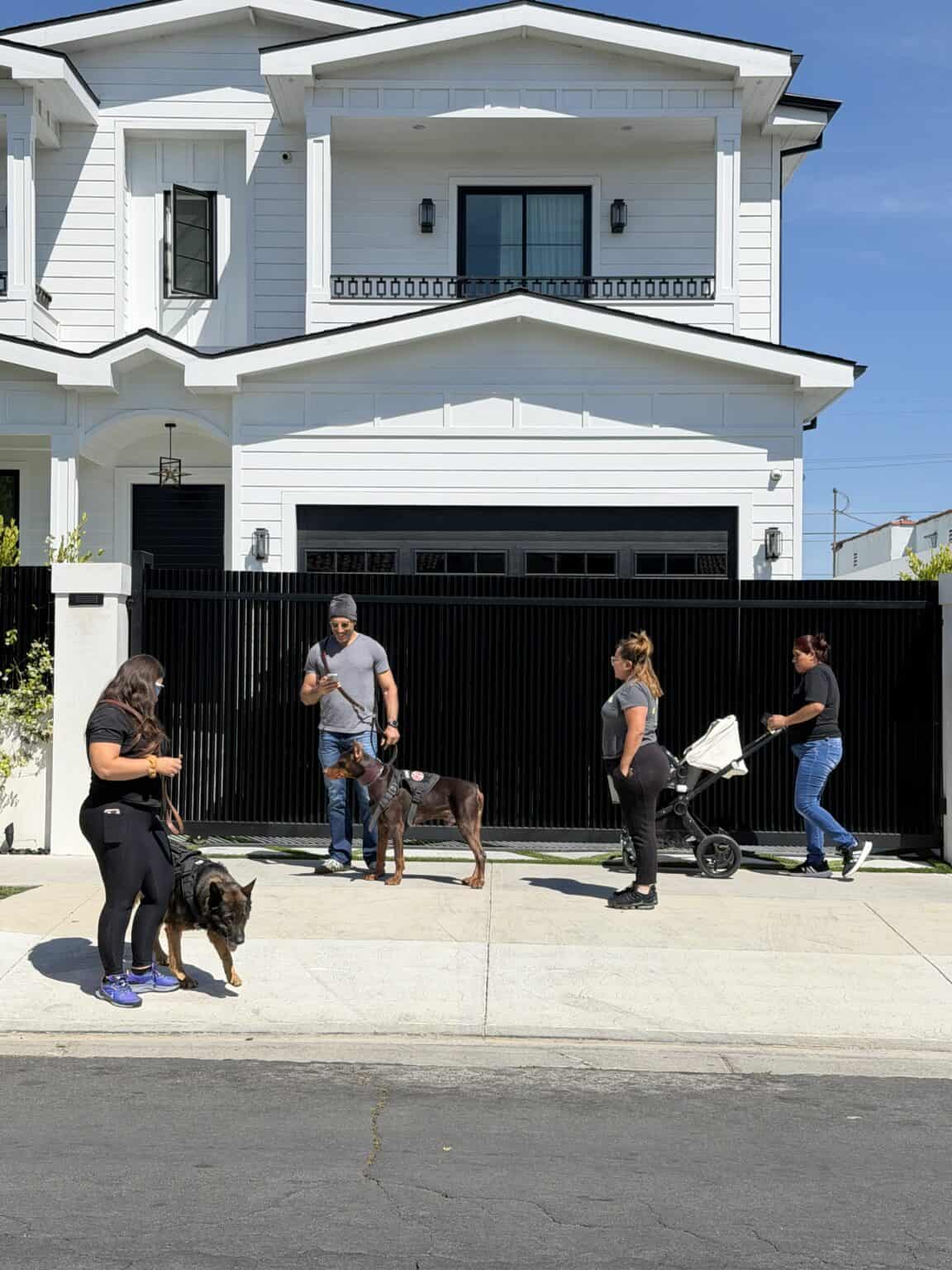
For families who operate at the highest levels of personal security and professional responsibility, the decision to bring a protection dog into the home is never casual. Many assume that size alone defines a protection dog, but a well-trained imported protection dog represents something fundamentally different: a carefully developed animal with verified lineage, proven temperament, advanced obedience, and the kind of emotional stability that allows it to live safely alongside children while remaining a reliable deterrent when circumstances demand it. This article clarifies exactly what imported protection dogs are, why executives and high-income families seek them specifically, and what the legal, practical, and family-integration realities look like from the inside.
Table of Contents
- Understanding imported protection dogs
- Why import? Key benefits for modern families
- Legal requirements and CDC compliance for importing dogs
- Selecting the right imported protection dog for your family
- Perspective: Why the right support makes all the difference
- Explore elite imported protection dogs for your peace of mind
- Frequently asked questions
Key Takeaways
| Point | Details |
|---|---|
| Specialized training and selection | Imported protection dogs undergo advanced training and are rigorously screened for temperament and reliability. |
| CDC compliance is critical | Legal import requires strict CDC health and vaccination documentation to ensure entry into the U.S. |
| Family suitability prioritized | Reputable importers focus on child safety and adaptability to family routines. |
| Ongoing support matters | The success of an imported protection dog relies on continuous training and expert guidance post-arrival. |
Understanding imported protection dogs
What separates an imported protection dog from any other large breed is not simply geography. The term refers to a dog that has been sourced from a specialized breeding and training program, typically in Europe, then transported to the United States with full documentation, verified health status, and an established training record. These programs, most commonly based in Germany, the Czech Republic, Belgium, and the Netherlands, have refined selection and development methods over decades, prioritizing working-line genetics that produce dogs with both drive and the capacity for emotional regulation.
Understanding the family protection dog definition requires recognizing that reliable protection and family compatibility are not opposing qualities. Imported dogs from reputable programs are specifically evaluated for their ability to be calm in the home, neutral in public settings, and responsive to controlled protection commands only when genuinely warranted. That balance is the product of structured selection, not chance.
Key distinctions between imported and domestic protection dogs:
- Lineage verification: Imported dogs come with documented pedigrees traceable to specific working-line bloodlines with known performance records.
- Standardized training frameworks: European programs follow established schutzhund (protection sport) or IPO (international protection obedience) progressions before transitioning dogs to real-world family protection work.
- Third-party temperament assessments: Reputable programs conduct formal evaluations by independent evaluators, not just the seller.
- Health screening protocols: Hip, elbow, and cardiac evaluations are standard, reducing the likelihood of genetic health issues that could affect both longevity and reliability.
- Documentation for importation: Imported dogs require public-health compliance documentation before they may legally enter the United States.
The documentation requirement is not a minor administrative detail. As the CDC Dog Importation Guidelines specify, dogs that have been in certain high-risk countries within six months before re-entry into the United States require specific rabies vaccination certification and must meet defined public-health standards before crossing the border. Any provider who does not address this directly should be regarded with caution.
| Feature | Imported protection dog | Domestic trained dog |
|---|---|---|
| Bloodline documentation | Verified European working lineage | Variable, often undocumented |
| Formal temperament testing | Standard in reputable programs | Inconsistent across providers |
| Training framework | Structured, multi-phase progression | Varies widely by trainer |
| Health screening | Comprehensive orthopedic and cardiac | Often minimal |
| Import documentation | Required and verifiable | Not applicable |
| Cost range | $40,000 to $150,000+ | $15,000 to $60,000+ |
Why import? Key benefits for modern families
Access to the right bloodlines is the first and most significant reason discerning families choose to import. Working-line German Shepherds, Belgian Malinois, and Dutch Shepherds produced in established European programs carry generations of verified behavioral data. Breeders in these programs do not simply breed the largest or most aggressive dogs. They select for a very specific profile: strong nerves, high trainability, genuine family affinity, and the capacity to switch off drive when outside of a protection context.
The practical advantages of that selection process are measurable. An imported dog with confirmed working-line genetics and a documented training history presents far fewer behavioral unknowns than a domestically produced dog whose breeding is opaque. For families with children, that reduction in uncertainty is not a luxury. It is a baseline requirement.
Benefits families consistently report with properly imported protection dogs:
- Predictable, stable behavior in the home environment, including around young children and household pets
- Reliable responsiveness to trained commands, even in high-distraction or high-stress situations
- Socialization to diverse environments, including travel, hotels, airports, and public venues
- A documented training record that can be continued or refined by a local trainer
- Confidence that health clearances reduce the risk of early-onset conditions
The confidence that comes from verified compliance is also significant. When a reputable provider handles the import process, families receive a dog whose CDC Dog Importation Guidelines compliance is already confirmed, whose vaccination records are in order, and whose entry into the United States was conducted without legal ambiguity. That peace of mind extends into every aspect of ownership.
Understanding why a protection dog is your family’s best defense requires looking beyond deterrence alone. An imported protection dog is present in the home every day, adapts to the family’s routine, and provides a consistent layer of security that no alarm system or camera network can replicate. The dog knows the family, knows the home, and knows the difference between a welcome guest and a genuine threat.
Selecting a reputable provider: key criteria
| Evaluation criterion | What to look for |
|---|---|
| Transparency of lineage | Full pedigree documentation provided without request |
| Training record | Written progression log covering all phases |
| Health certifications | OFA or equivalent hip, elbow, and cardiac clearances |
| CDC compliance documentation | Completed before delivery, not after |
| Post-delivery support | Ongoing guidance from the original trainer |
Pro Tip: Before finalizing any imported protection dog purchase, request the full vaccination and health documentation package in writing. Confirm that CDC compliance for U.S. entry has been addressed, and verify that the rabies certification meets current federal requirements. This step alone eliminates a significant category of risk for buyers.
Choosing a family protection dog is a process that rewards thoroughness. Families who invest the time to evaluate providers rigorously are consistently more satisfied with the outcome than those who prioritize speed or price alone.
Legal requirements and CDC compliance for importing dogs
The legal framework for importing dogs into the United States is more specific than most buyers anticipate, and protection dog imports require careful attention to detail at every stage. The requirements are not designed to obstruct the import process. They exist to protect public health and ensure that animals entering the country meet defined standards of vaccination and health documentation.
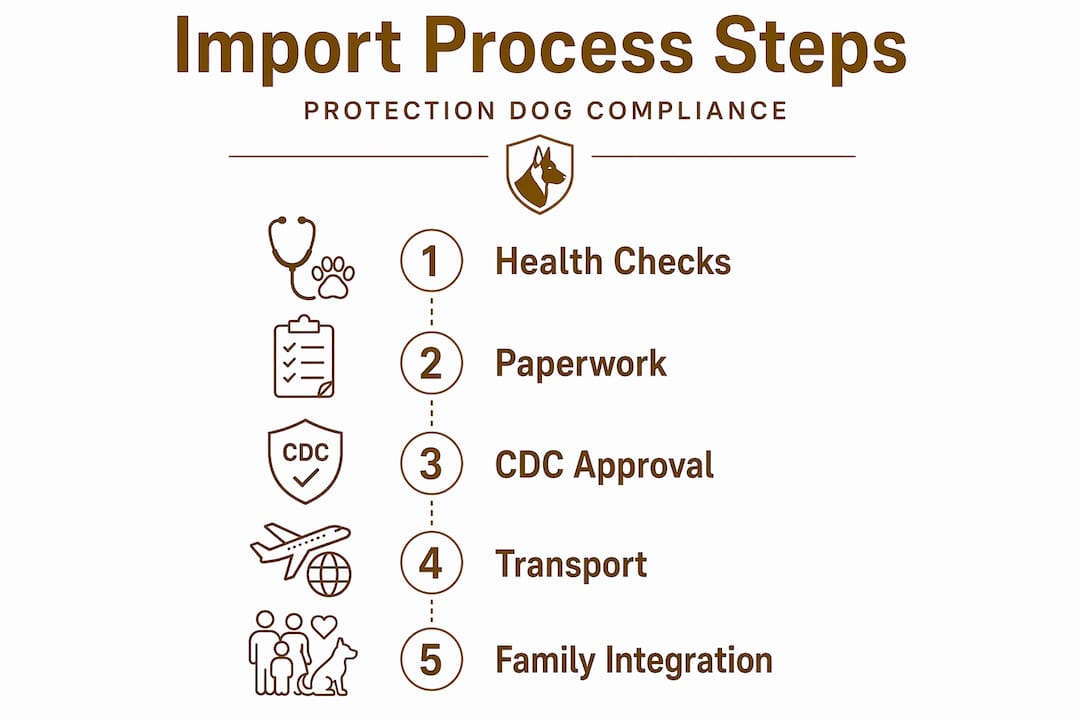
Here is a clear, step-by-step view of what the process requires:
- Determine country of origin risk classification. The CDC designates certain countries as high-risk for canine rabies based on disease prevalence. Dogs originating from or transiting through these countries within six months before U.S. entry face additional documentation requirements.
- Obtain U.S.-issued rabies vaccination certification. As specified in the CDC rabies vaccination requirements, a specific Certification of U.S.-issued Rabies Vaccination form is required for dogs re-entering from high-risk countries. This is distinct from foreign vaccination records and must be completed using the correct federal form.
- Schedule vaccination timing correctly. The rabies vaccination must be administered at a minimum age, and the timing of the vaccination relative to travel must meet CDC-specified intervals. Vaccinations administered outside this window may not be accepted.
- Arrange a USDA-accredited veterinarian inspection. Before departure, the dog must be examined by an accredited veterinarian who confirms the animal is free from signs of disease and fit for transport.
- Prepare all documentation for port-of-entry review. CBP (Customs and Border Protection) officers review all documentation at the port of entry. Incomplete or incorrect paperwork can result in detention, mandatory quarantine, or denial of entry.
- Confirm airline and transport carrier requirements. Individual airlines maintain their own live animal transport requirements, which must align with federal standards but may include additional restrictions related to breed, crate dimensions, or health certification timing.
“Families who attempt to manage the import process independently, without a provider who specializes in this work, face a meaningful risk of delays, quarantine, or denial at the border. The documentation requirements are specific, the timing is precise, and the margin for error is narrow. Partnering with an experienced provider who handles compliance as part of the placement process is not a convenience. It is a safeguard.”
Reviewing tips for picking the right protection dog will clarify why compliance-readiness should be one of the first questions families ask any provider, not an afterthought addressed at the end of the sale.
Pro Tip: Schedule all CDC paperwork, vaccinations, and health certifications well ahead of the intended transport date. A minimum of eight to twelve weeks of lead time is advisable to accommodate any documentation corrections, re-examinations, or scheduling delays with accredited veterinarians.
Selecting the right imported protection dog for your family
Legal clearance is the foundation. The right fit, however, requires a separate and equally careful evaluation. Not every imported protection dog with sound documentation and a strong training record will be the right match for every family. The selection process should be systematic, evidence-based, and centered on the specific needs and daily life of the household.
Traits to prioritize during selection:
- Emotional stability: The dog should remain calm and controlled in novel environments, around unfamiliar people, and in the presence of children’s unpredictable movements and sounds.
- Obedience reliability: Commands should be followed consistently, not contingently. A protection dog that obeys only in low-distraction environments is not reliable in the scenarios that matter most.
- Socialization history: Ask for a documented record of environments the dog has been exposed to, including urban settings, vehicles, crowded spaces, and interactions with children of different ages.
- Appropriate drive level: Protection dogs with very high drive can be exceptional in a sport or professional security context, but may require experienced handling in a family home. Select the drive level that matches your household’s capability.
- Handler transition history: Dogs that have successfully transferred to new handlers without behavioral regression demonstrate the kind of adaptability that family life requires.
Understanding the traits of a great family protection dog helps families approach the selection process with clarity rather than relying solely on the provider’s representations. Both sources of information matter. Your own direct observation matters most.
Checklist for evaluating an imported protection dog before purchase:
- Verify full pedigree documentation
- Review the complete training progression log
- Confirm all health certifications, including orthopedic and cardiac evaluations
- Confirm CDC compliance documentation is complete and current
- Request video of the dog in a family environment, including interaction with children
- Arrange an in-person meeting, ideally including a controlled interaction with your children
- Speak directly with the trainer about the dog’s specific history, tendencies, and any behavioral notes
There are key considerations before choosing a protection dog that go beyond breed and training level, including the family’s lifestyle, travel schedule, living environment, and prior experience with dogs. A provider who asks thoughtful questions about these factors before recommending a match is demonstrating the professional standard that families should expect.
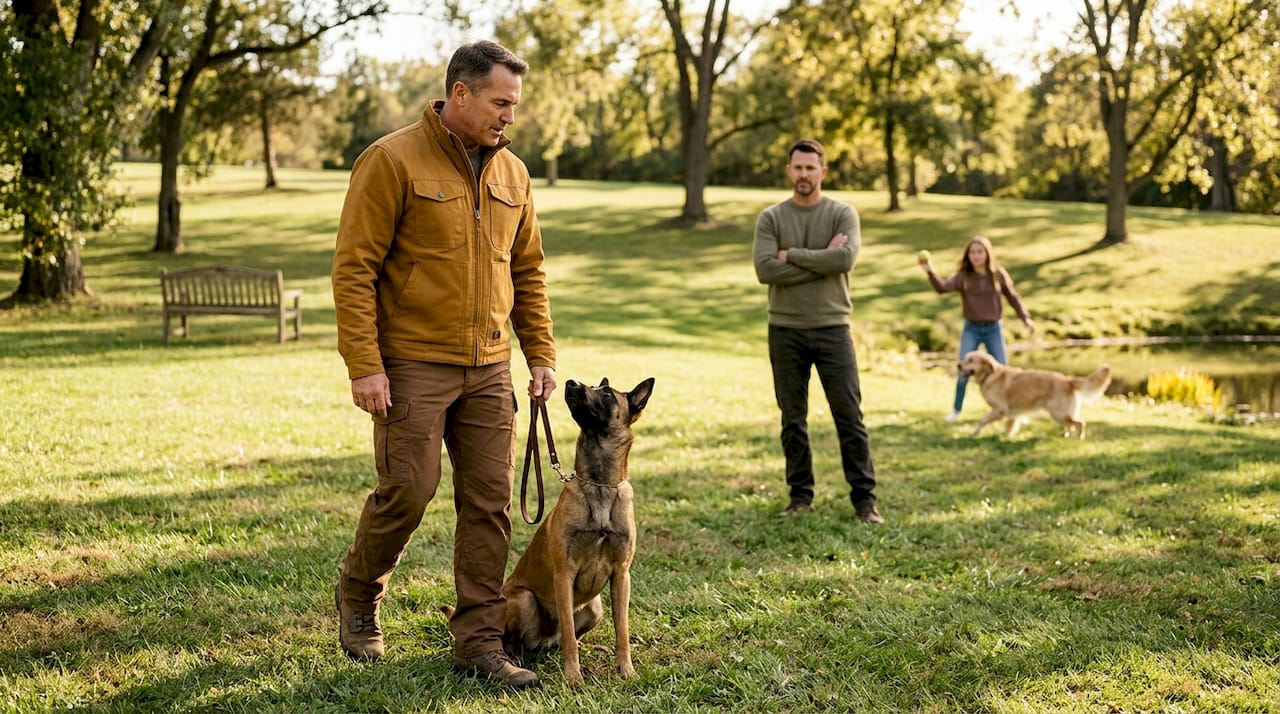
Pro Tip: Arrange a controlled meet-and-greet with your children present before committing to a specific dog. Observe how the dog responds to sudden movements, noise, and direct physical contact from children. A dog with genuine family integration training will remain calm, attentive, and relaxed throughout this interaction.
Perspective: Why the right support makes all the difference
Most discussions of imported protection dogs conclude at delivery. The dog arrives, the paperwork is in order, and the transaction is considered complete. In our experience, that framing misses the most consequential phase of the entire process.
The adjustment period following placement is where the real outcomes are determined. An imported dog, regardless of how exceptional its training history, is entering a new household with new routines, new people, new sounds, and new expectations. The family, meanwhile, is learning to read and communicate with an animal trained in a different language, by different handlers, in a different context. That transition requires active support, not passive observation.
Families who engage in structured family protection dog training after placement consistently achieve better long-term outcomes than those who assume the dog’s prior training will carry forward without reinforcement. Ongoing guidance from a qualified professional, even in the form of periodic check-ins or structured sessions, allows families to build genuine communication with the dog and address any emerging patterns before they become established habits.
The relationship between family, dog, and trainer functions as a system. When that system is well-supported, the dog’s original training becomes a foundation that continues to develop rather than a fixed asset that gradually depreciates. That ongoing investment is what separates a working protection relationship from a dog that simply lives in a home.
Explore elite imported protection dogs for your peace of mind
Families and executives who have moved through every stage of this process, from understanding what qualifies a dog as a genuine imported protection dog to navigating CDC compliance and selecting the right individual match, arrive at the same point: the quality of the provider determines the quality of the outcome.
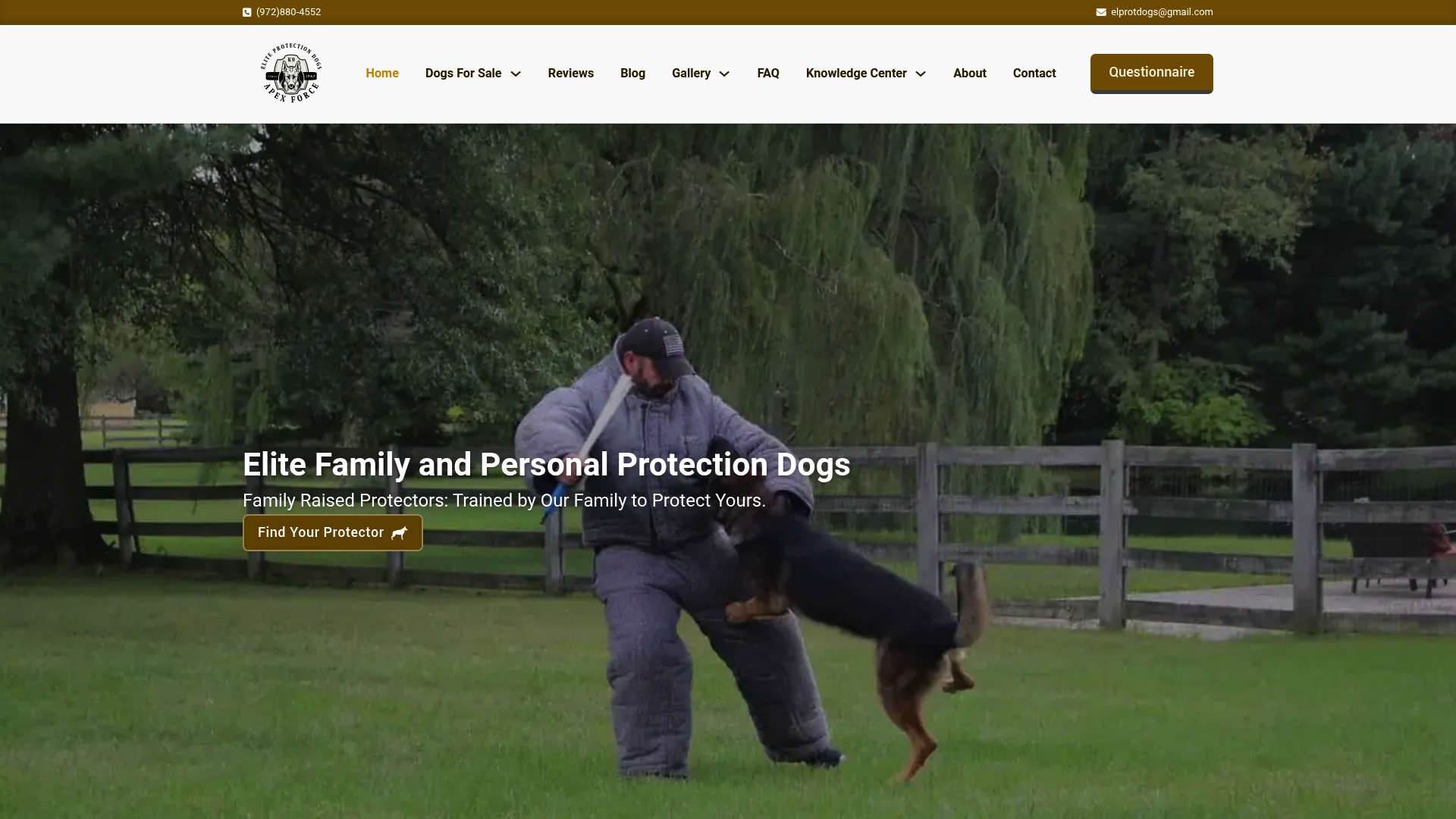
Elite Protection Dogs specializes in exactly this work, offering fully trained, imported, and CDC-compliant family protection dog options developed specifically for high-income families, executives, and households with children. Every dog is placed with complete documentation, verified health clearances, and the backing of a professional team that remains available after delivery. View available protection dogs and request a personalized consultation to identify the right match for your household’s specific needs, lifestyle, and security requirements. For families committed to genuine family security and peace, the next step is a conversation with a team that understands both.
Frequently asked questions
What paperwork is needed to import a protection dog into the U.S.?
You need the CDC Certification of U.S.-issued Rabies Vaccination along with supporting health documentation; the specific form required depends on the dog’s country of origin and travel history in the six months before entry.
Are imported protection dogs safe around children?
Reputable providers ensure that imported protection dogs are fully socialized and temperament-tested for child interaction, and a qualified provider will offer documented evidence of that socialization history before placement.
How long does it take to complete the import process?
The import process typically takes several weeks to several months, depending on the dog’s training timeline, required health screenings, and the completion of all CDC and USDA documentation requirements.
What is the difference between an imported and domestic protection dog?
Imported protection dogs generally come from established European working-line programs with verified bloodlines, formal multi-phase training progressions, and comprehensive temperament assessments that are not consistently available from domestic providers.
Can any breed be an imported protection dog?
No. Only select breeds with the right combination of genetic temperament, physical capacity, and trainability are considered for protection and family living, with German Shepherds, Belgian Malinois, and Dutch Shepherds being the most established choices.