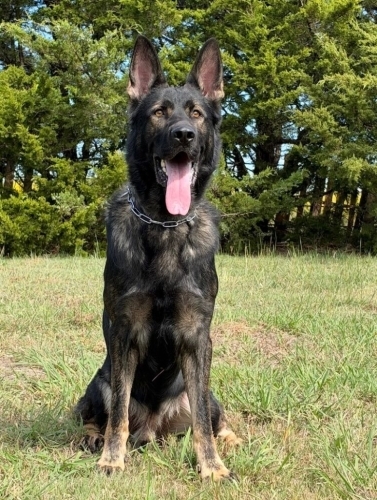
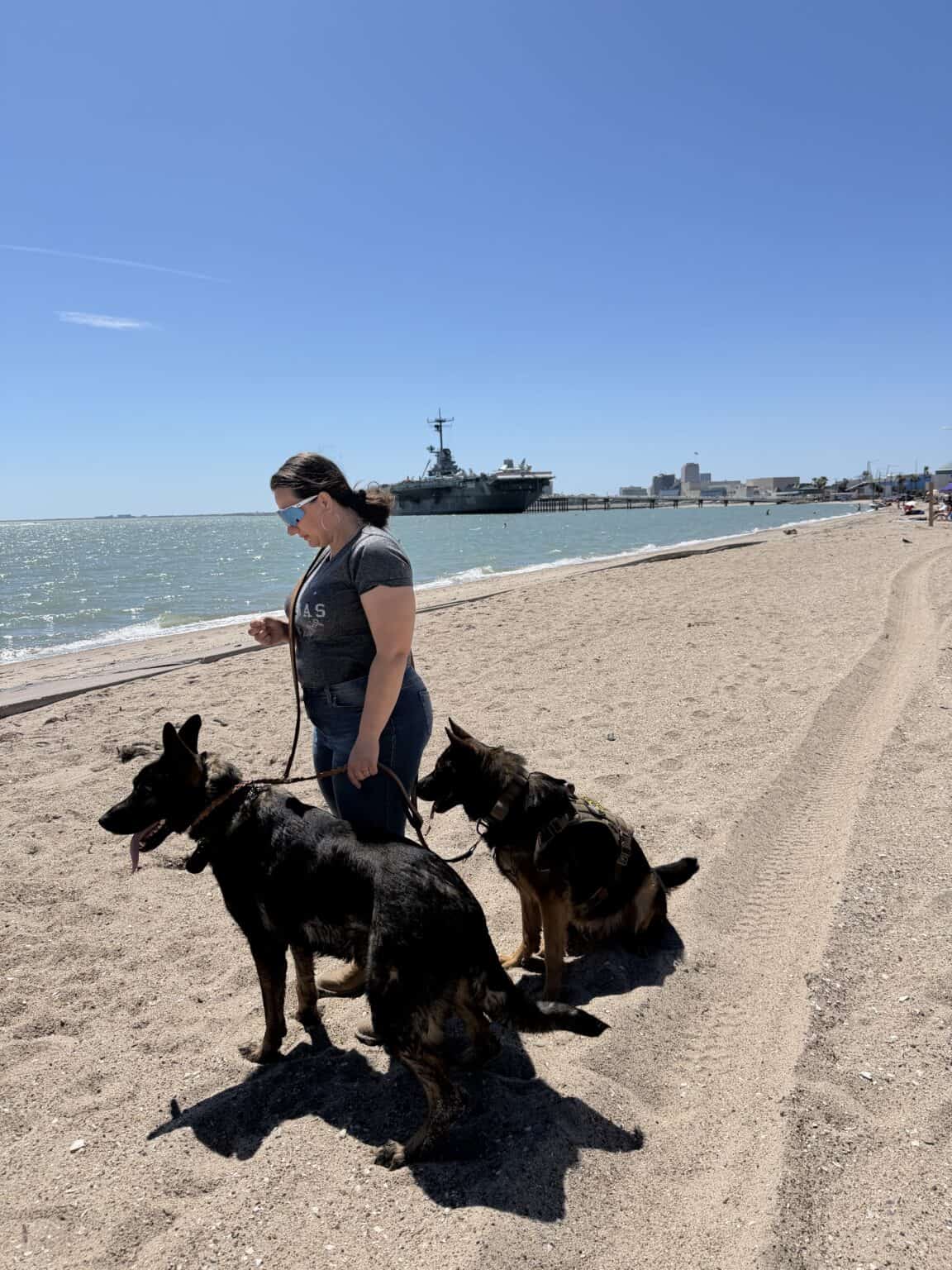
When a known stalker begins targeting a family, the threat is rarely abstract. It is specific, persistent, and often escalating. For high-profile individuals and affluent families, that threat demands a proactive security response rather than a reactive one. Protection dog stalker threat response training is one of the most effective tools available, but it requires considerably more than a well-bred dog and a few weeks of obedience work. Early improvement begins within 4 to 8 weeks, yet meaningful, reliable threat response behavior develops over 6 to 12 months of consistent, structured training. Understanding what that process actually involves, from temperament evaluation to maintenance protocols, is what separates families who feel protected from families who genuinely are.
Table of Contents
- Assessing suitability and preparing your dog for protection training
- Building foundational obedience and impulse control for threat response
- Specialized stalker threat response training: techniques and best practices
- Maintaining and verifying training effectiveness over time
- Why consistent, science-backed training is critical for protection dogs facing stalkers
- Explore expert protection dogs and training services for your family’s safety
- Frequently asked questions
Key Takeaways
| Point | Details |
|---|---|
| Training timeline | Protection dog behavioral change requires 6 to 12 months of consistent work with early improvements visible in about 4 to 8 weeks. |
| Suitability matters | Appropriate temperament, stable nerves, and individual dog history are critical for effective stalker threat response training. |
| Impulse control under arousal | Dogs must be trained to maintain control during high-stress situations, not just calm environments. |
| Owner role is critical | The owner’s training style, environment, and awareness profoundly influence the dog’s behavior and aggression risk. |
| Professional support needed | Expert trainers ensure safe, reliable threat response training and provide ongoing maintenance and evaluation. |
Assessing suitability and preparing your dog for protection training
Not every dog is suited for protection work, and beginning stalker threat response training with the wrong candidate can produce an animal that is unreliable, inconsistent, or unsafe. The first step is an honest, professional evaluation of the dog’s individual temperament. The three qualities that matter most are nerve stability (the ability to recover from unexpected stimuli without prolonged fear or shutdown), confidence (a willingness to engage in novel, stressful environments), and balanced drive (sufficient motivation to engage threats without becoming uncontrollable under arousal).
Breed is a common starting point for many families, but it is rarely the most useful one. Research confirms that owner training style and history are primary factors influencing a dog’s aggression profile, not breed alone. A Belgian Malinois raised in a chaotic, undersocialized environment may be far less suited for protection work than a calm, well-socialized German Shepherd Dog with structured early development behind it. Evaluating the individual dog’s history and environment gives you a far more accurate picture of readiness than breed labels.
Before any defensive or threat response work begins, the dog must have a solid foundation in place. That means reliable recall in distracting environments, a stable sit and down stay, and basic impulse control under mild arousal. The training journey from puppyhood to protection dogs makes clear that a dog skipping this foundational phase will develop behavioral inconsistencies that become serious safety problems later.
Key traits to evaluate before starting protection training:
- Nerve stability: Does the dog recover quickly from loud noises, sudden movement, or unfamiliar environments?
- Drive balance: Is the dog motivated without becoming unmanageable under excitement?
- Social neutrality: Can the dog remain calm around strangers, children, and public settings?
- Handler bond: Does the dog show clear attentiveness to its handler even under mild stress?
- Stress recovery: How long does it take the dog to return to baseline after a challenging exposure?
| Trait | Ideal profile | Concern |
|---|---|---|
| Nerve stability | Quick recovery, no shutdown | Prolonged fear or freezing |
| Drive level | Engaged but controllable | Frantic or disengaged |
| Social neutrality | Calm around unknown people | Reactive or anxious in public |
| Obedience baseline | Reliable sit, down, recall | No foundational commands |
| Handler focus | Consistent attention | Easily distracted or ignores handler |
Pro Tip: Film your dog in three distinct environments, a quiet home, a busy public space, and a mildly stressful situation, and review the footage with a professional trainer before committing to a protection training program. Behavioral inconsistencies that are invisible day-to-day become obvious on video.
Building foundational obedience and impulse control for threat response
With a properly assessed dog in place, the next step is building the obedience and impulse control framework that makes safe, reliable threat response possible. This phase is often underestimated by families who want to move quickly to defensive scenarios, but it is the most critical phase in the entire process. A dog that cannot hold a down stay while a stranger approaches, or that cannot disengage from excitement on command, is not ready for protection work regardless of its physical capability.
The importance of obedience training for personal protection dogs goes far beyond basic manners. Obedience commands, practiced under escalating levels of distraction and arousal, become the handler’s primary control mechanism during a real threat event. Every command must be reliable not just in a quiet training environment but in the exact kind of high-stress, high-arousal scenarios that stalker threats produce.
One of the most important and consistently overlooked realities in defensive dog response training is that impulse control practiced only in calm environments will fail the moment real-world arousal levels climb. Dogs do not automatically transfer skills learned at low arousal into high-arousal situations. That transfer must be trained deliberately, incrementally, and with professional structure.
Steps to build reliable obedience and impulse control for threat scenarios:
- Establish all primary commands (sit, down, stay, recall, heel) in a low-distraction environment with 95% reliability before adding any arousal.
- Introduce mild environmental distractions, people walking at a distance, ambient noise, unfamiliar surfaces, while maintaining command compliance.
- Add mild arousal triggers such as play or food excitement, then require the dog to perform obedience commands before receiving the reward.
- Graduate to controlled exposure to stress triggers while maintaining obedience, using counter-conditioning to reframe neutral strangers as non-threatening stimuli.
- Practice the “off” or “out” command, full disengagement from excitement or a staged threat, under gradually increasing arousal until it is 100% reliable.
- Conduct scenario-based obedience drills where the handler simulates stress (rapid movement, raised voice) while requiring the dog to hold position.
Pro Tip: The “out” or disengagement command is arguably the most important command in a protection dog’s entire vocabulary. Before any threat scenario training begins, this command should be practiced daily across a wide variety of contexts until the dog responds instantly regardless of arousal level.
Specialized stalker threat response training: techniques and best practices
With obedience and impulse control established, the training transitions into the territory most families are thinking about from the start: the specific canine personal safety tactics that enable a dog to identify and respond to stalking behaviors. This phase is where personal protection dog training diverges sharply from standard obedience or sport work.
Training dogs for stalker threats requires identifying the specific behavioral patterns a stalker is likely to exhibit: prolonged proximity, repetitive appearance, approach from unusual angles, and lingering near vehicles or entry points. These are not the same behavioral cues as a standard intruder scenario, and training must reflect that difference. The dog must learn to recognize low-level, persistent threat patterns rather than only reacting to immediate physical aggression.
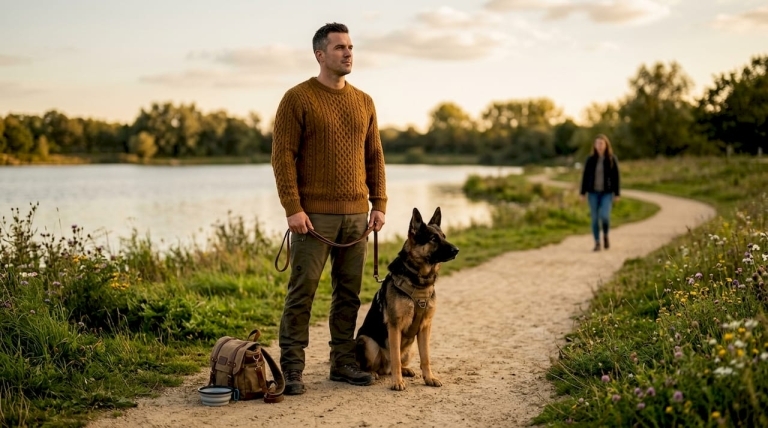
Effective protection dog obedience training at this stage focuses heavily on controlled engagement and, equally, controlled disengagement. A dog that engages but cannot disengage on command is a liability in a legal and practical sense. Clear, consistent commands for both actions must be installed before any scenario-based work begins.
Step-by-step approach to stalker-specific threat response training:
- Identify the dog’s current threshold distance for specific triggering behaviors (a person staring, lingering at a distance, following the handler) using structured observations.
- Introduce staged stalking scenarios at well below the dog’s threshold, rewarding calm awareness and handler-focused behavior, not reactivity.
- Gradually reduce the distance and increase the realism of the staged scenario, always keeping the dog below its reactivity threshold during foundational sessions.
- Install the engagement command in low-arousal scenarios first, ensuring the dog understands it as a precise instruction rather than a general release into aggression.
- Practice controlled disengagement immediately after every engagement exercise so the dog learns that engagement is always followed by a calm return to neutral.
- Increase scenario complexity, adding environmental variables such as crowds, nighttime settings, or confined spaces, only after each previous level is stable.
The most effective defensive response approach combines environmental management with structured desensitization and counter-conditioning, and this applies directly to response tactics for protection dogs in real-world stalker scenarios.
Key comparison of reactive vs. trained protection dog responses:
| Behavior | Untrained reactive dog | Trained protection dog |
|---|---|---|
| Sustained following by a stranger | Uncontrolled barking, lunging | Calm alerting, handler-oriented |
| Approach from an unusual angle | Fear or flight response | Controlled watchfulness, awaits command |
| Nighttime perimeter intrusion | Inconsistent, may shut down | Reliable alert, holds position |
| Command to disengage | No reliable response | Immediate disengagement on cue |
Signs a dog is ready for advanced threat scenario work:
- Holds obedience commands reliably with a staged “threat” present at 30 feet
- Returns to handler focus within 10 seconds of a triggering stimulus ending
- Performs engagement on command without escalating beyond the command’s intent
- Disengages completely and returns to neutral within 3 to 5 seconds on the “out” command
Maintaining and verifying training effectiveness over time
A protection dog that was effective six months ago is not automatically effective today. Training is not a destination; it is an ongoing commitment. Long-term behavioral change requires 6 to 12 months to establish, and without consistent maintenance, skills that were once reliable will degrade. For families investing in this level of security, ongoing verification is as important as the initial training program.
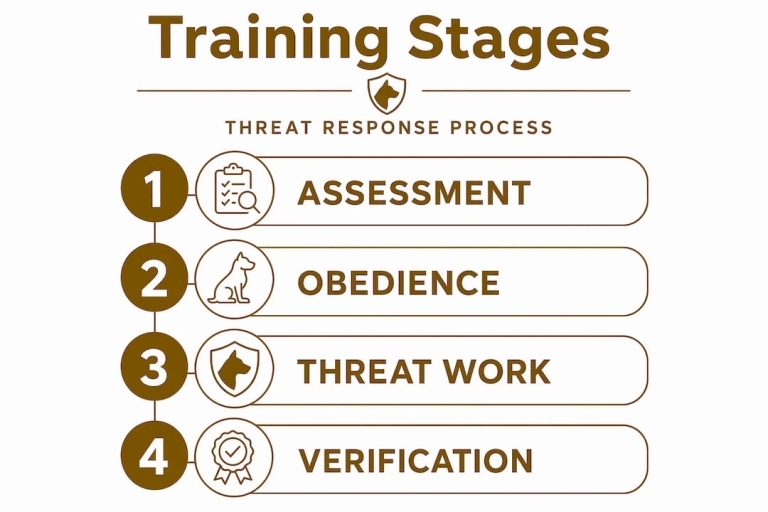
Maintenance does not require daily scenarios at full intensity. It requires regular, purposeful practice that keeps the dog sharp across all skill layers: obedience, impulse control, social neutrality, and threat recognition. Weekly short sessions that revisit core commands under mild arousal, combined with monthly refresher sessions that include realistic scenario exposure, are generally sufficient to sustain reliability. The benefits of professional protection dog training include access to ongoing guidance and structured refresher programs that families cannot easily replicate on their own.
Key performance indicators for maintaining trained protection behavior:
- Recovery speed: How quickly does the dog return to baseline after a triggering event?
- Threshold consistency: Is the dog engaging at the same distance from stimuli as during training?
- Command reliability: Are all primary obedience and protection commands performing at 90%+ across contexts?
- Handler attentiveness: Does the dog remain focused on the handler in public environments without prompting?
- Disengagement speed: Is the “out” command producing an immediate response in real-world settings?
Pro Tip: Keep a simple weekly training log that records the specific commands practiced, the environment, the distraction level, and the dog’s response quality. Patterns of degrading performance are easy to miss in day-to-day interactions but immediately visible when reviewed over three to four weeks.
| Maintenance frequency | Focus | Indicators of success |
|---|---|---|
| Daily | Obedience commands, impulse control | 90%+ reliability in varied environments |
| Weekly | Scenario-based drills, controlled engagement | Consistent threshold, fast disengagement |
| Monthly | Full refresher with professional trainer | No regression from prior performance levels |
Why consistent, science-backed training is critical for protection dogs facing stalkers
The training community has long debated how much natural ability versus conditioning determines protection dog effectiveness. In our experience, that debate misses the more important point entirely. The dog’s individual capacity matters, but the owner’s role in sustaining that capacity matters far more. Research confirms that owners shape behavior through training style and environment more than any other factor. A dog trained by professionals and then returned to an inconsistent, unsupportive household environment will regress. That is not a training failure. It is an owner environment failure.
The second area where conventional expectations about protection dogs tend to mislead families is impulse control under high arousal. Most people imagine a well-trained protection dog as one that bites hard and fast on command. In reality, the most valuable capability is the opposite: the ability to remain absolutely controlled, alert, and focused when the arousal environment says otherwise. Training for that capability requires deliberate, graduated exposure to stress and is the piece most often skipped when families attempt to manage protection training without professional oversight.
Finally, progress in behavioral training is rarely visible week to week. Families who expect dramatic improvements after a few sessions often reduce training frequency right when consistency matters most. The measurable outcomes, faster recovery times, more reliable disengagement, greater threshold distance stability, build slowly and compound over months. The benefits of a well-trained protection dog are not in what the dog can do in a single demonstration. They are in what the dog does consistently, every time, across every environment, when it actually counts.
Explore expert protection dogs and training services for your family’s safety
Families serious about protection against stalker threats need more than a strong dog. They need a dog evaluated for the right temperament, developed through a structured training program, and supported by professionals who understand real-world threat environments. At Elite Protection Dogs, every dog placed with a family has undergone one to two years of intensive development covering obedience, impulse control, socialization, and reliable threat response.

Our professional protection dog services include complete temperament evaluation, structured obedience and defensive response development, and comprehensive handler education so your family can maintain what has been built. Each of our elite personal protection dogs is developed to integrate naturally into family life while remaining a dependable protector when circumstances require it. Learn more about the value of professional training and how our programs are designed to meet the specific safety needs of high-profile families and individuals.
Frequently asked questions
How long does protection dog stalker threat response training usually take?
It typically takes 6 to 12 months of consistent, professional training to achieve significant behavioral change and reliable threat response, though early improvement appears within 4 to 8 weeks of structured work.
What traits make a dog suitable for stalker threat response training?
Dogs with stable nerves, balanced drive, and a well-documented individual history are the strongest candidates, since training style and environment influence suitability far more than breed alone.
Can I train my dog to respond to stalker threats at home, or is professional help required?
Professional guidance is essential because managing high-arousal impulse control and controlled engagement requires expertise that is difficult to replicate without structured oversight. Severe reactive behaviors require certified expertise to address safely and reliably.
How do protection dogs differentiate between real threats and normal people?
They are conditioned through structured scenarios to engage only on specific commands and to remain neutral around familiar or non-threatening individuals. As trained protection dogs learn when to engage and disengage on command, accidental engagement around neutral parties becomes functionally eliminated.